Between Two Snow Giants: Three Days Along the Haba Seam
I have walked this route as a trekker and led it as the licensed local guide, and what stays with me is the feeling of moving along a seam between two worlds. On one flank rises Haba Snow Mountain; across the gorge stands its taller twin, Jade Dragon, and far below them the upper Yangtze keeps grinding out one of the deepest canyons on Earth. In three days and two nights you sleep under Haba beneath a sky thick with stars, wake to birdsong at the glamping camp, stand at a holy glacial lake near 4,200 m, and finish on one of the world's great gorge trails. It is graded Easy–Moderate — gentle underfoot, but honestly high. Come in spring or autumn, somewhere in the March–November window, give your lungs a day to settle first, and let the mountains do the rest.

The land
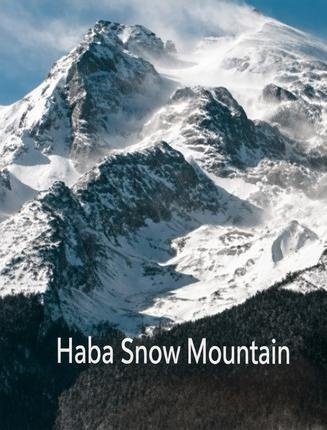
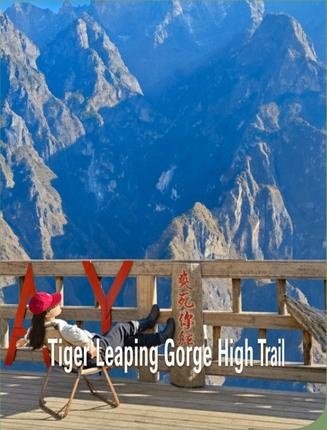
This corner of northwest Yunnan is built on a grand scale. Haba Snow Mountain tops out at 5,396 m and carries numerous hanging glaciers down its flanks; directly across the gorge stands Jade Dragon Snow Mountain at 5,596 m. Between the two, the Jinsha — the upper Yangtze — has carved Tiger Leaping Gorge, roughly 15 km long and, at its tightest, only about 25 m wide. From river to summit the drop is close to 3,790 m, which makes this among the very deepest river canyons anywhere on the planet. (It is not *the* deepest — that title belongs to the Yarlung Tsangpo in Tibet, further west — so I always say "one of the deepest," never "the deepest.")
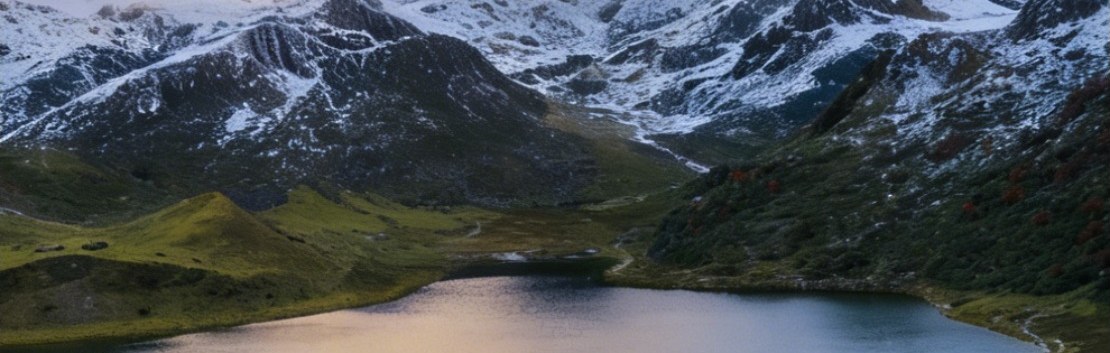
All of it lies inside the Three Parallel Rivers of Yunnan, a UNESCO World Natural Heritage Site inscribed in 2003, where the Yangtze, Mekong and Salween run side by side for more than 170 km through the Hengduan ranges before peeling away to three different seas. The route's own high point comes not at any summit but at Black Lake, a glacial pool sitting at about 4,200 m on Haba's shoulder — a typical plateau lake, dark-watered over its black bed-stones, averaging somewhere around 18 m deep.
A short history
This valley became "known" to the outside world largely through one man: Joseph Rock, the Austrian-American botanist who based himself in Lijiang from 1922 and spent the better part of three decades — until 1949 — documenting Naxi and Dongba culture for *National Geographic*. Rock visited Tiger Leaping Gorge on foot in 1924, one of the first Westerners to do so, and described it in the magazine in 1926.
The romance that followed owes something to fiction. James Hilton published *Lost Horizon*, and its imagined paradise "Shangri-La," in 1933; the idea settled onto these valleys so firmly that nearby Zhongdian officially renamed itself Shangri-La in 2001. The gorge's High Trail — the path you walk on Day 3 — only opened to foreign trekkers in 1993. And in the mid-2000s the whole gorge was very nearly drowned: a hydro dam was proposed around 2004 that could have displaced up to 100,000 people, many of them Naxi, before Yunnan authorities shelved it in December 2007. Such proposals have resurfaced over the years, and people here still speak of them carefully.
The people & their mountains
The human landscape is layered. Naxi farmers hold the valley floors — Haba Village, at the western foot of the mountain, is mostly Naxi — while Yi hamlets sit higher on the slopes, all within a Tibetan-administered prefecture. The Naxi are often described as descendants of the ancient Qiang, and number around 300,000 today.
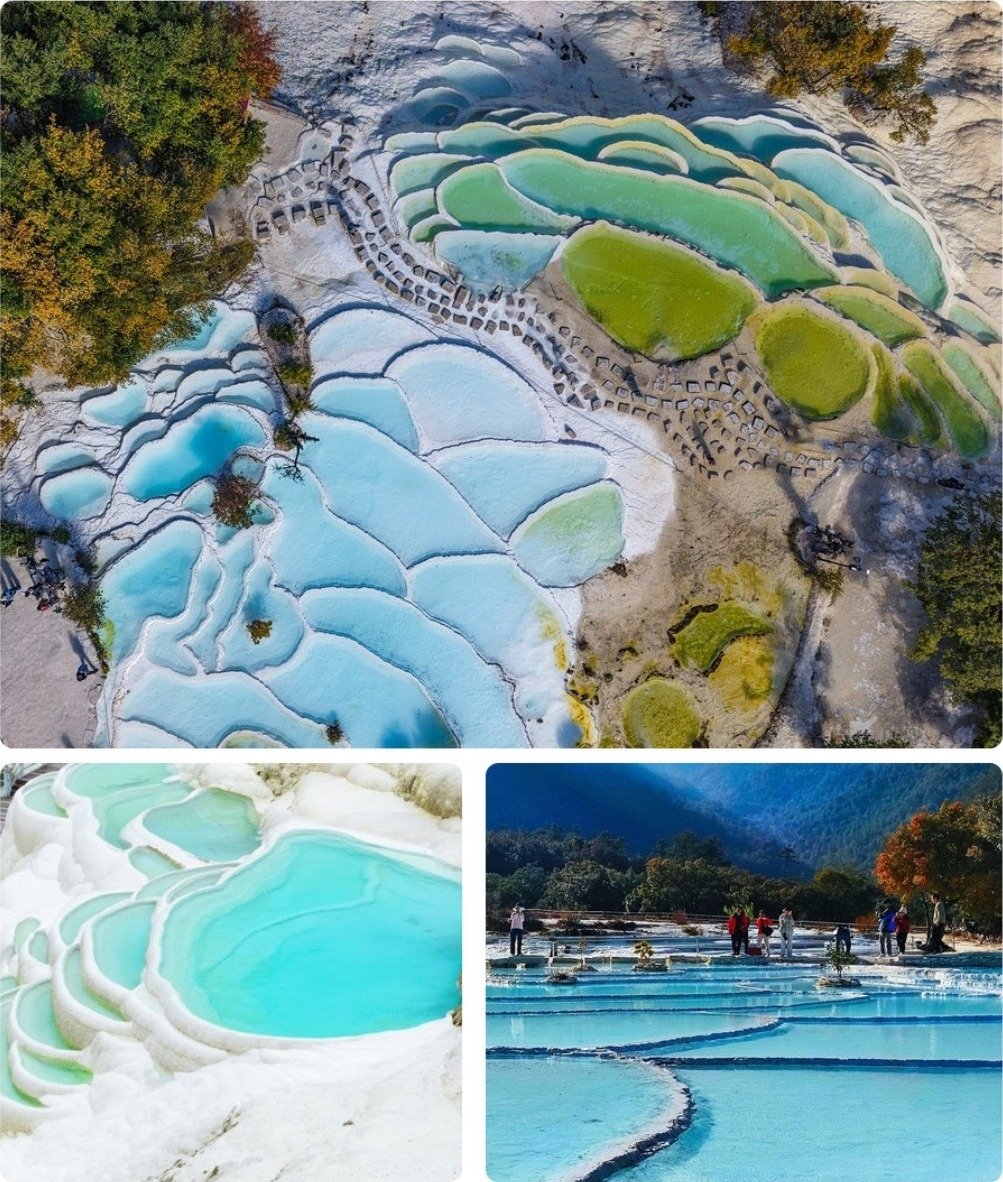
What I find most moving is how the Naxi see the land itself. Their Dongba religion is a faith of nature worship, in which mountains, rivers and stones hold spirits — so the peaks you walk beneath are not scenery to them but presences. The Naxi also keep a pictographic script of more than 2,000 characters, one of the very few picture-writing systems still in ceremonial use anywhere in the world; its manuscripts entered UNESCO's Memory of the World register in 2003. You meet this faith on the very first day at Baishuitai, the white calcium-carbonate travertine terraces — sometimes compared to Pamukkale — that the Naxi hold sacred as the cradle of Dongba belief. And you meet it again at Black Lake, which the Naxi treat as a holy lake. Local lore says you must not shout at its shore, lest you anger the water and bring on rain. I ask everyone I guide to honor that, whether or not they share the belief.
Walking the route
For all its altitude, this is a kind walk — graded 2/5, gentle underfoot, with time to look around rather than just grind through. The effort is honest but never frantic, and the rhythm of three days lets the place open slowly: a day of approach and culture, a day among meadows and the holy lake, and a final day on the gorge itself.
Day 1 — Lijiang → Baishuitai → Haba Village → Dela Ranch → Fanchen Dela Glamping Camp
We drive up out of Lijiang to Baishuitai, where the sacred white travertine terraces step down the hillside, then on through Haba Village to Dela Ranch and the Fanchen Dela glamping camp. Dinner is around the camp, and the evening ends at a campfire under the bulk of Haba — sometimes with fireworks if the group is in the mood.
Day 2 — Fanchen Dela Glamping Camp → Sheep-pen Pasture → Orchid Meadow → Black Lake → Haba Village
After breakfast at camp we climb gradually through Sheep-pen Pasture and the meadow the operators call Orchid Meadow toward Black Lake at about 4,200 m — the high point of the whole trek. This is where you stand quietly at the dark, holy water before descending back to Haba Village for the night.
Day 3 — Haba Village → Tiger Leaping Gorge High Trail → 'Halfway' Viewpoint → Dragon Cave Waterfall → Teacher Zhang's Guesthouse → Lijiang
The finale is the gorge itself. We join the famous High Trail and work up its signature stretch — the "28 Bends," a switchback climb of roughly 400 vertical metres — before the Halfway viewpoint throws the entire canyon open beneath your feet. From there we pass the Dragon Cave Waterfall and Teacher Zhang's Guesthouse before driving back to Lijiang, where the group disperses around 18:00.
Know before you go
- When to come: March through November, with spring and autumn the sweet spots. I steer people away from the July–August monsoon, when exposed sections of the gorge turn slick and more prone to rockfall.
- How hard: Easy–Moderate (2/5) on the feet, but the route tops out near 4,200 m at Black Lake, and that is real altitude. Build in a day to acclimatize in Lijiang or Shangri-La beforehand, drink plenty of water, and watch for headaches or poor sleep. If you have heart, lung, or other conditions affected by altitude — or if you're unsure — consult your doctor before committing to a high-altitude trek.
- Guide or solo: The gorge itself is famously solo-friendly, and plenty of independent trekkers walk the High Trail. But for *this* route I think guided is the sensible default: the altitude, the changeable river weather, the navigation off the main gorge path, and the language all tip the balance. A guide also matters for rescue and for reading conditions on the exposed sections.
FAQ
How fit do I need to be? Reasonably fit, but you don't need to be an athlete. The walking is moderate; the real challenge is the altitude near 4,200 m and the 28 Bends climb on the last day. If you can manage a long day's hike with some sustained uphill, you'll be fine.
Do I need to worry about altitude sickness? You should be aware of it. At 4,200 m, mild headaches, breathlessness, and broken sleep are common even on an "easy" trek. Acclimatize in Lijiang or Shangri-La first, hydrate well, ascend at a steady pace, and tell your guide early if you feel unwell. Anyone with relevant medical conditions should consult a doctor beforehand.
What's the camping like? The first night is glamping at the Fanchen Dela camp beneath Haba — a comfortable, set-up camp rather than rough wild-pitching, with dinner provided and a campfire in the evening. The second night is in Haba Village.
Are there cultural customs I should respect? Yes. This is Naxi country, and the land carries deep spiritual meaning here. Black Lake is a holy lake — local belief asks visitors not to shout at its shore. Treat the travertine terraces at Baishuitai and the mountains themselves with the same quiet respect.
What should I pack for the weather? Layers. Even in the good seasons, high-altitude days can swing from warm sun to cold wind, and the gorge has its own microclimate. Bring sun protection, a warm mid-layer, a waterproof shell, broken-in hiking boots, and more water capacity than you think you'll need.
Is the gorge really that deep? It is one of the deepest river canyons on Earth — close to 3,790 m from the Jinsha river up to the surrounding peaks. It isn't the single deepest in the world (that's the Yarlung Tsangpo in Tibet), but standing at the Halfway viewpoint with the canyon dropping away below you, the scale is hard to overstate.