Yubeng & Meili Snow Mountain, Yunnan · 6 days / 5 nights · Moderate (3/5) · $108/day · $650 total per person
Duration6 days / 5 nights
DifficultyModerate (3/5)
Max altitude~3,800 m
Best seasonLate spring through autumn (May–June and September–October offer the clearest mountain views)
Group sizeSmall group (2–12)
LanguageEnglish-speaking guide on request · or local guide + Inglite app for English support
Trek to a hidden Tibetan village beneath sacred Meili
Highlights
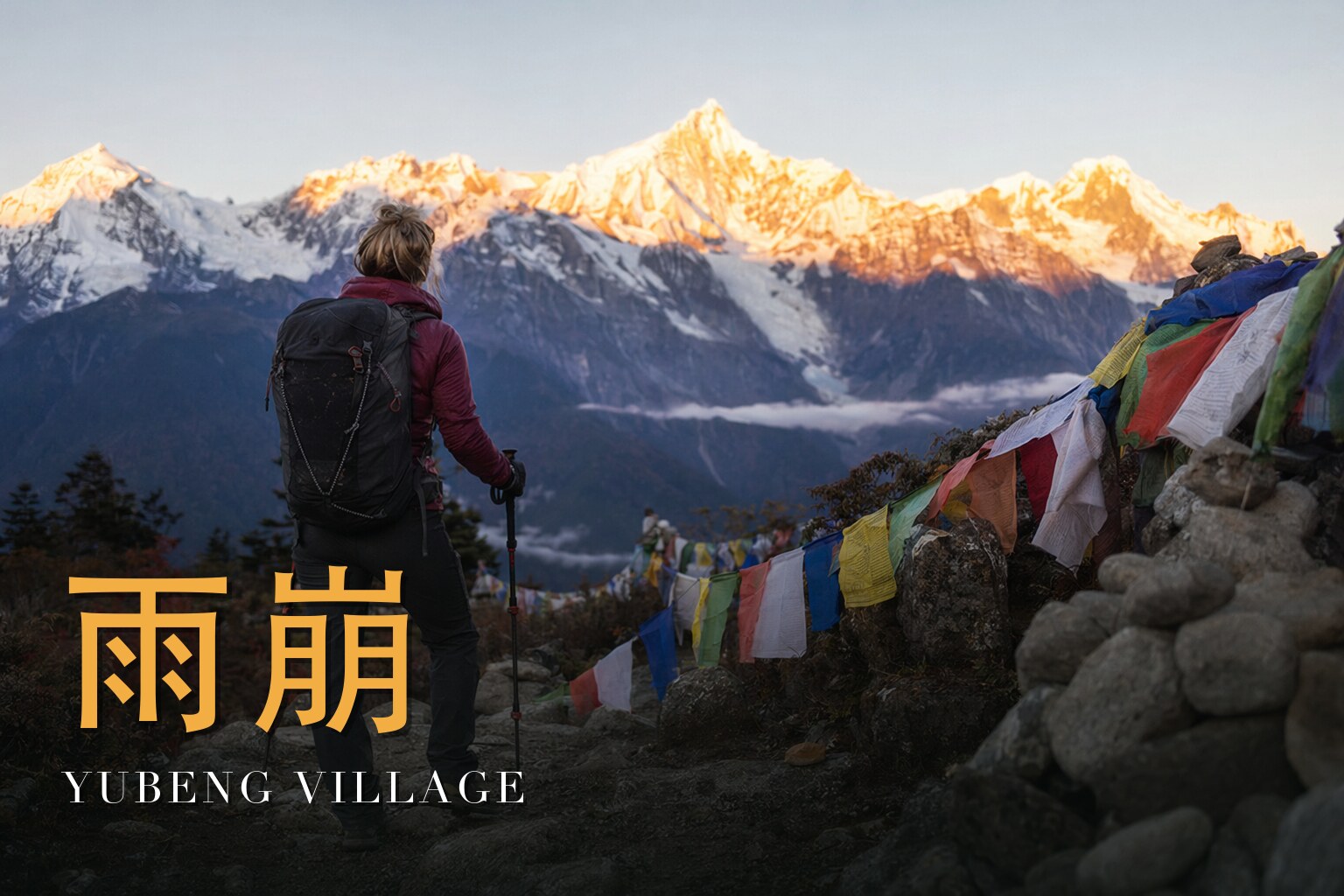
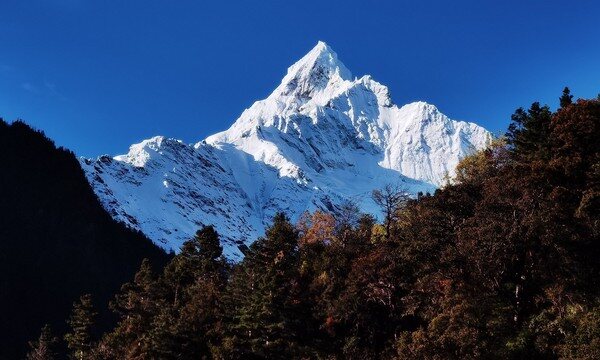
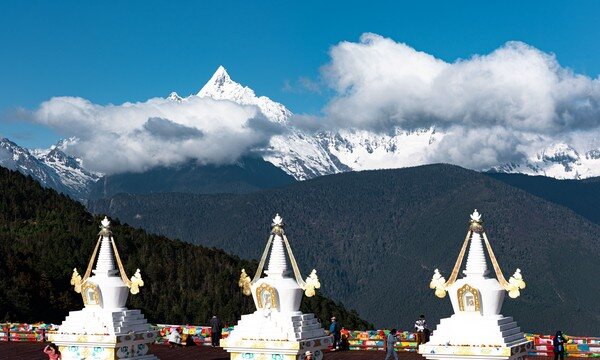
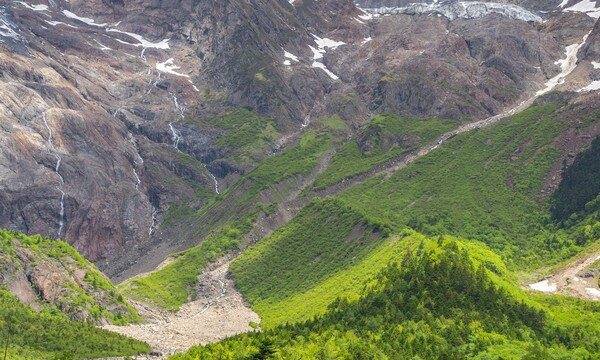
Kawagebo & the Meili Snow Mountains — Yunnan's holiest and still-unclimbed peak, glowing at dawn when first light sets the golden summit ablaze above Feilai Temple
Yubeng Village — a hidden cluster of traditional Tibetan farmhouses in high meadows, ringed by snow peaks and reached only on foot
The Sacred Waterfall — a pilgrimage shrine cascading off Meili beneath the Goddess Peak (Shenü) and Five-Crowned Peak, where believers are blessed with holy water
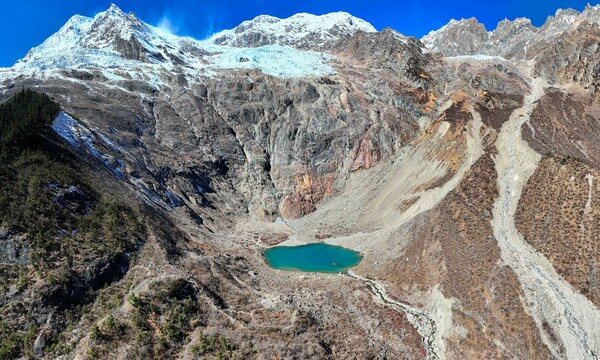
The Ice Lake — a glacier-fed turquoise tarn at the foot of Kawagebo, former base camp of the Sino-Japanese summit expedition
Jinsha River's Ω-bend — the Golden Sands River carving a dramatic horseshoe loop below the ancient Tea-Horse Road at Moon Bend
Baima Snow Mountain Nature Reserve — a high pass through habitat of the endangered Yunnan golden snub-nosed monkey, en route to Deqin, Yunnan's highest county
Napahai & the Yila grasslands — Shangri-La's wetland refuge of the protected black-necked crane and Yunnan's largest alpine pasture grazed by Tibetan herders
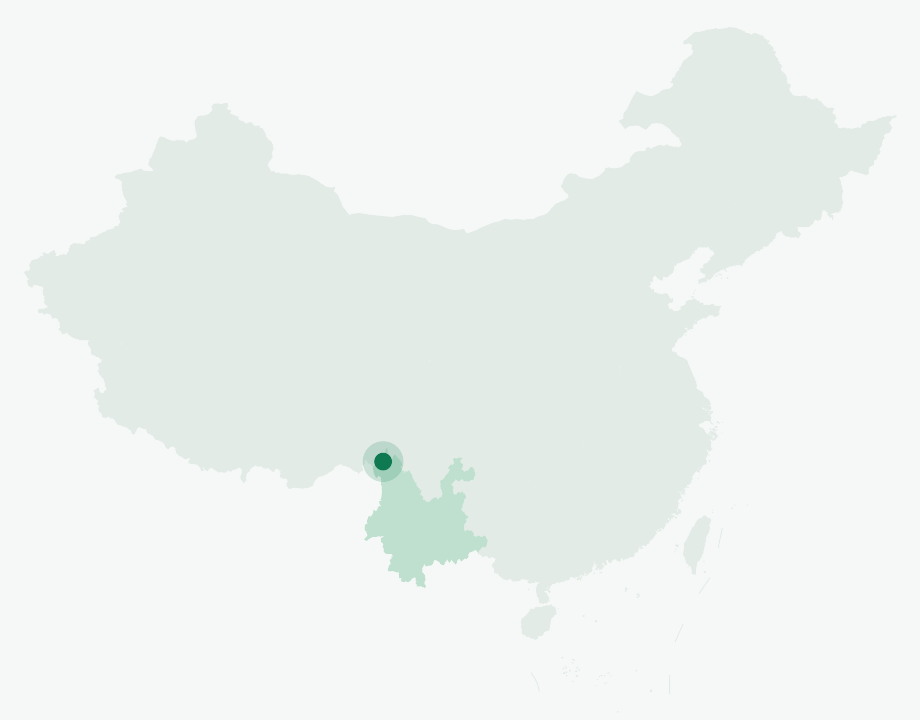
Where in China
📍 Yunnan Province · Deqin (Yubeng), southwest China
What you'll do
Tucked deep in the folds of the Meili Snow Mountains, on the border of Yunnan and Tibet, the hamlet of Yubeng is one of the last truly hidden villages in China — for years reachable only on foot, its handful of Tibetan farmhouses scattered across high meadows in the shadow of Kawagebo, the holiest and still-unclimbed peak of the range. This six-day journey carries you from the timbered courtyards of Lijiang up onto the roof of Yunnan and into the heart of a living pilgrimage landscape, where prayer flags fray in the wind above the trail and devout Tibetans still walk for weeks to circle the mountain.\n\nThe approach alone is a spectacle. Leaving Lijiang, you drive north toward Shangri-La with Jade Dragon Snow Mountain (Yulong Xueshan) shifting on the horizon, cross the picture-perfect grasslands of Xiaozhongdian, and pause at the great Ω-shaped bend of the Jinsha (Golden Sands) River as it loops dramatically below the old Tea-Horse Road. The road then climbs into the Baima Snow Mountain Nature Reserve — home to the endangered Yunnan golden snub-nosed monkey — and tops out at the Baima Pass before dropping into Deqin, the highest county seat in Yunnan, where you spend the night at Feilai Temple within sight of the Meili massif.\n\nAt dawn you wait for the legendary moment the first light ignites the golden summit of Meili, then descend to the trailhead and walk in to Yubeng, arriving among its traditional Tibetan houses before sunset. Over the following days you hike to the Sacred Waterfall — a pilgrimage site where believers receive a blessing of holy water beneath Shenü (the Goddess Peak) and the Five-Crowned Peak — and climb through sea-buckthorn thickets, rhododendron groves and pristine alpine forest over the Xiangnazong Pass to the Ice Lake, a glacier-fed tarn at the foot of Kawagebo that once served as base camp for the ill-fated Sino-Japanese summit attempt. On the final day you follow the Yubeng River down through the deep Ninong Canyon, then drive back via Shangri-La's Napahai wetlands and the sweeping Yila grasslands to close the loop in Lijiang.\n\nThroughout, you walk with a professional mountain guide and photographer, sleep in family-run guesthouses among the villagers, and trace a route that blends genuine alpine adventure with one of the most spiritually charged corners of the Tibetan world.
Day by day
Day 1
Arrival in Lijiang
Gather in Lijiang and settle into the hotel, where your guide carries out an equipment check. An evening pre-trip briefing covers the detailed itinerary, a Q&A, and safety guidance. Note: the airport is about an hour from the city center — plan your arrival accordingly.
Day 2
Lijiang → Xiaozhongdian → Moon Bend → Feilai Temple
A full day on the road (about 360 km). Drive north toward Shangri-La with Jade Dragon Snow Mountain on the horizon, crossing the meadows of Xiaozhongdian, and pause at Moon Bend where the Jinsha (Golden Sands) River carves a dramatic Ω-shaped curve. Continue over the Baima Pass through the Baima Snow Mountain Nature Reserve to Deqin, overnighting near Feilai Temple.
Day 3
Feilai Temple → Golden Summit at sunrise → Ninong Valley → Yubeng Village
Rise early for the legendary first light striking the golden summit of Meili, then drive to the Ninong trailhead and hike roughly 16 km (about 1,000 m of ascent) in to Yubeng, arriving among its traditional Tibetan houses before sunset.
Day 4
Yubeng Village → primeval forest → Sacred Waterfall → return
A round-trip hike of about 14 km (roughly 500 m up and down). Set out past Lower Yubeng and climb for about three hours through old-growth forest and alpine meadow to the Sacred Waterfall, a core pilgrimage site beneath the Goddess Peak and Five-Crowned Peak, before returning to the guesthouse.
Day 5
Yubeng Village → sea-buckthorn thickets → Xiangnazong Pass → Xiaonong Base Camp → Ice Lake → return
A demanding round trip of about 14 km (some 700 m of ascent and descent). Climb through sea-buckthorn thickets, high-altitude forest and rhododendron groves to the Xiangnazong Pass, where General Peak fills the view, then descend to the former Sino-Japanese summit base camp and continue to the glacier-fed Ice Lake. Lunch at the camp before returning by the same route, reaching the village around 6:00 pm.
A final hike of about 17 km, descending roughly 1,000 m along the Yubeng River and down through the deep Ninong Canyon to Ninong Village. Drive on to Shangri-La to visit the Napahai wetlands and the Yila grasslands, then return to Lijiang, arriving around 8:30 pm.
Why this trek
Yunnan's holiest unclimbed peak
Wake beneath Kawagebo, the sacred 6,740 m summit of the Meili range that no climber has ever stood upon, and watch dawn set its golden crown ablaze.
A village reachable only on foot
Sleep three nights in Yubeng, a hidden cluster of Tibetan farmhouses scattered across high meadows with no road in — only the trail.
A living pilgrimage landscape
Walk the Sacred Waterfall and Ice Lake circuits alongside Tibetan pilgrims, on routes layered with prayer flags, holy water and centuries of devotion.
Guided and photographed throughout
A professional mountain guide and dedicated photographer accompany the whole journey, with English support through the Inglite app.
Included
Private touring vehicle for 5 days of travel (vehicle type matched to group size)
5 breakfasts during the trek
5 nights in standard twin rooms — 1 night Lijiang, 1 night Feilai Temple, 3 nights in Yubeng Village (three-star hotels / guesthouses)
Free equipment rental: trekking poles, simple crampons (weather permitting), an oxygen canister per person, and a disposable rain poncho
Yubeng Village entrance ticket
A professional guide and photography service throughout
FAQ
How many days is the Yubeng Village trek?
Yubeng Village runs 6 days / 5 nights.
How hard is the Yubeng Village trek?
It's rated Moderate (3/5), topping out around ~3,800 m. Reasonable hiking fitness and time to acclimatize to altitude are recommended.
What is the maximum altitude on the Yubeng Village trek?
The high point is around ~3,800 m. Acclimatize gradually and take altitude-sickness precautions — consult your doctor before any high-altitude trek.
What is the best time to do the Yubeng Village trek?
The best seasons are Late spring through autumn (May–June and September–October offer the clearest mountain views).
Do I need a guide for the Yubeng Village trek, and is there English support?
English-speaking guide on request · or local guide + Inglite app for English support It's run by an independent, licensed local mountain operator, with Inglite supporting you in English the whole way.
How much does the Yubeng Village trek cost?
Approximately $650 per person ($108/day · $650 total). You arrange payment directly with the licensed local operator — Inglite never collects payment.
Who runs this
This trek is operated by an experienced, licensed local mountain operator who runs the route with a professional guide and on-trail photographer throughout. English-language support is available via the Inglite app and your guide, so Western trekkers can travel with confidence even in this remote Tibetan-border region.
Run by an independent, licensed local operator. You arrange payment with the operator directly — Inglite connects you and never collects payment. Outdoor travel carries inherent risks; we recommend travel/outdoor insurance. Terms