Dangling, Danba, Sichuan · 6 days / 5 nights · Moderate-Challenging (3.5/5) · max ~4,300 m · $205/day · $1,230 total per person
Sichuan's secret valley of holy peaks and milk-blue lakes.
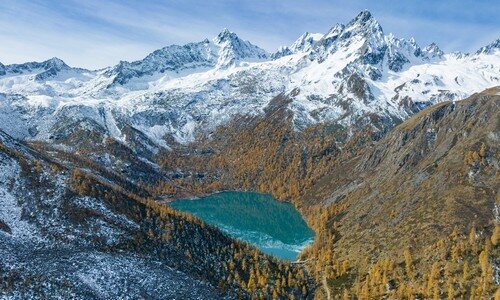
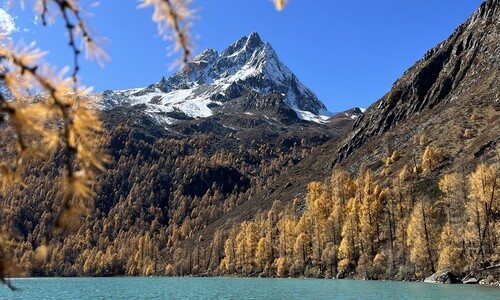
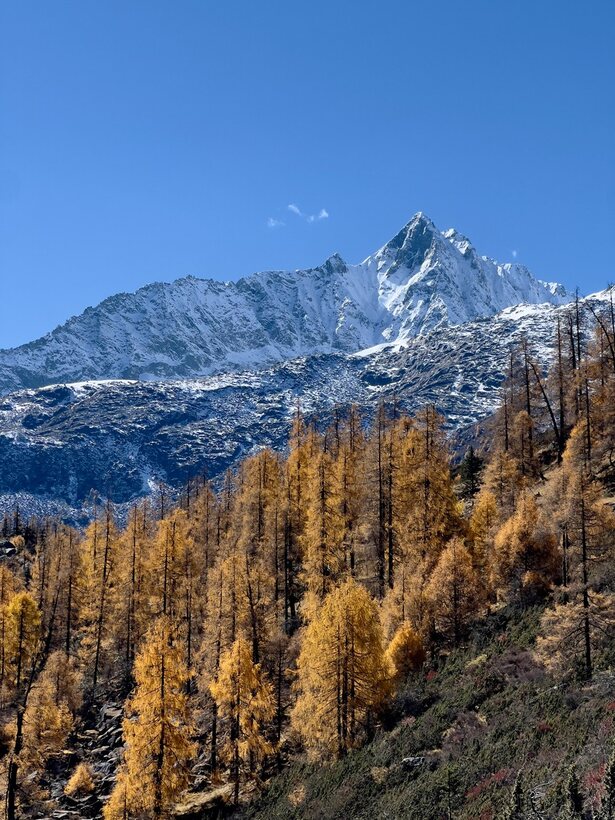
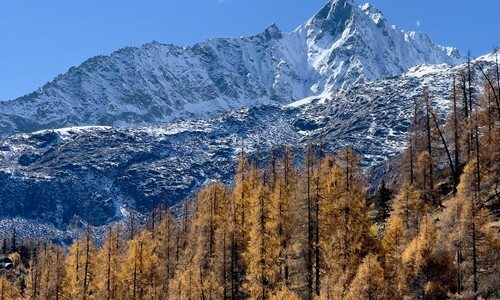
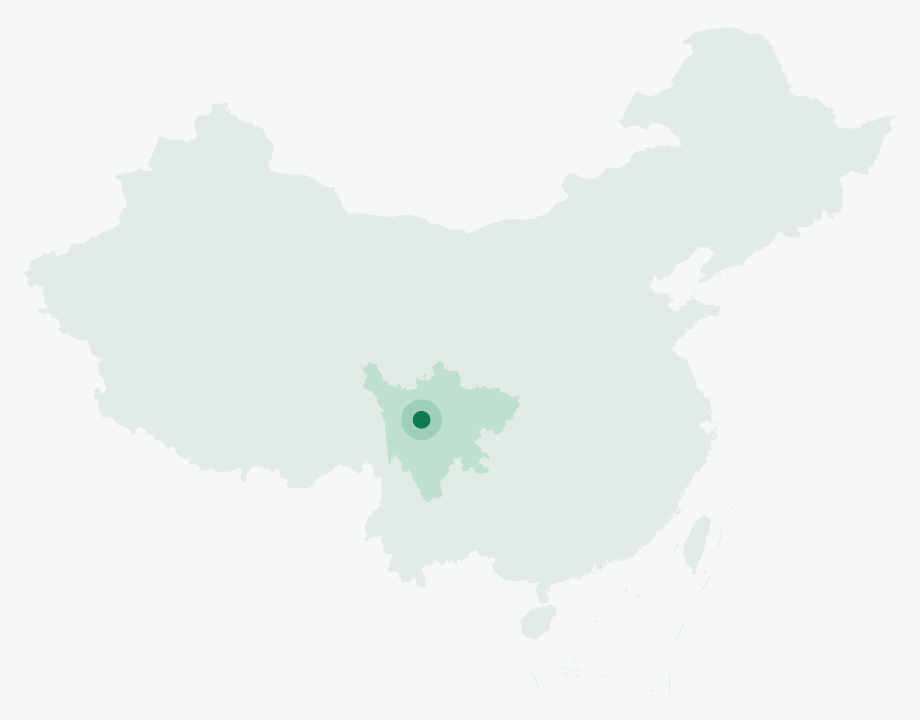
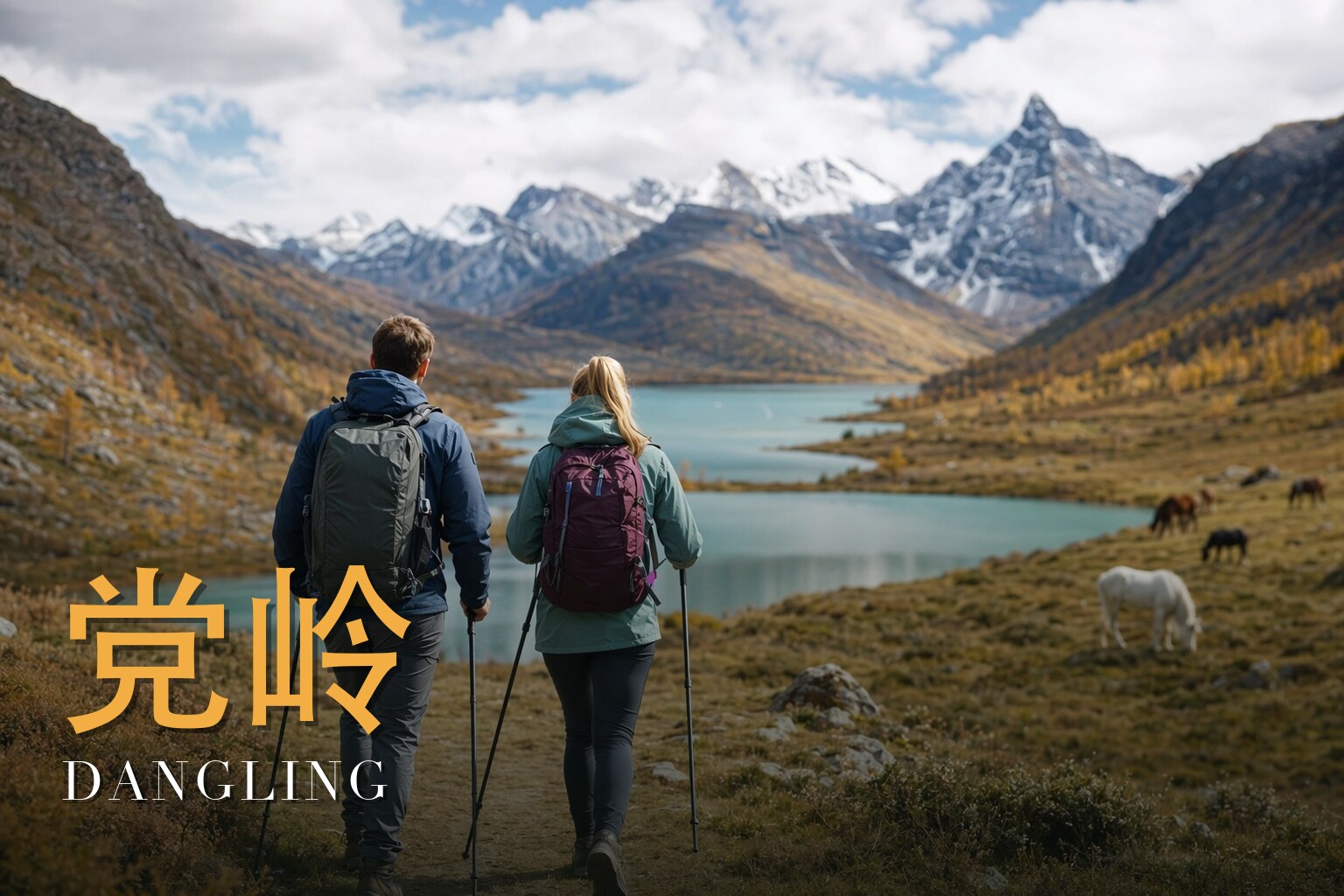
Tucked deep in the Hengduan Mountains of western Sichuan, Dangling is one of China's last great undiscovered alpine valleys. Set at an average altitude of around 4,000 metres and rising toward the 5,470-metre Xiaqiangla massif, this is a thousand-year-old Tibetan homeland, settled by Tangut refugees who fled the Mongol invasions and still revered as holy ground. The Dangling Snow Mountains alone hold twenty-eight peaks above 5,000 metres, ringing the valley like a vast white screen suspended between earth and sky. Within the surrounding nature reserve you'll find the jade lakes of a Jiuzhaigou, the snowscapes of a Yubeng and the forests of a Miyaluo, braided into one ever-changing canvas that shifts dramatically with the seasons.\n\nThis itinerary is built for travellers who want the scenery without the crowds. Over six unhurried days you drive west from Chengdu through Balang Mountain and the Gyarong Tibetan heartland, then trek on foot to a string of high lakes most outsiders never reach. You'll stand above Gourd Lake (Húlú Hǎi), named for its unmistakable double-bulbed shape and resting in its valley for millennia, its cobbled shallows fading from green to deep blue. Two hundred metres higher, a single ridge reveals both Gourd Lake to the east and Zhuoyong Lake (Zhuóyōng Cuò) to the west — the highest and largest lake in the region, set beneath three sacred peaks and offering the full panorama of the Dangling snow mountains. Earlier, you walk three hours to Jiayila Lake (Jiǎyīlā Cuò), a glacial pool that holds a dreamlike, milky-white colour year-round; locals call it the Milk Lake, and unlike its famous cousin at Yading it is wrapped not only in snow peaks but in dense, untouched forest.\n\nThe culture is as rich as the landscape. You overnight in the ancient stone watchtower villages of Danba's Zhonglu, beneath the towering peak of Murtuo (Mòěrduō), and visit Moska, a remote mandala-shaped highland village at 4,300 metres that Buddhists honour as a sacred mandala — the dwelling of bodhisattvas — its temple filled with stone carvings of the warrior-king Gesar, its meadows patrolled by fearless, photogenic marmots. And as a final restorative flourish, Dangling guards three wild hot springs to its south, from a sulphurous 34–37°C soak to a 75°C spring set among calcified rock and Tibetan prayer flags — a place where the same nature that awes also heals.
Dangling Alpine Lakes runs 6 days / 5 nights.
It's rated Moderate-Challenging (3.5/5), topping out around ~4,300 m. Reasonable hiking fitness and time to acclimatize to altitude are recommended.
The high point is around ~4,300 m. Acclimatize gradually and take altitude-sickness precautions — consult your doctor before any high-altitude trek.
The best seasons are Mid-May to June (rhododendron bloom) and mid-October (autumn larch colour).
English-speaking guide on request · or local guide + Inglite app for English support It's run by an independent, licensed local mountain operator, with Inglite supporting you in English the whole way.
Approximately $1230 per person ($205/day · $1,230 total). You arrange payment directly with the licensed local operator — Inglite never collects payment.
This trek is operated by an experienced, licensed local mountain operator who knows the Dangling valley and Gyarong Tibetan region intimately. English-language support is provided throughout via the Inglite app and your guide, so you can travel deep into this remote corner of Sichuan with confidence.
Run by an independent, licensed local operator. You arrange payment with the operator directly — Inglite connects you and never collects payment. Outdoor travel carries inherent risks; travel insurance with high-altitude and evacuation cover is required. Booking & refunds · Terms
— or send a request below —
✅ Request received! Reference
We reply within 24h. Fastest: message us on WhatsApp and mention your reference.
Chat on WhatsAppIn the gold of October, and again when the rhododendrons set the slopes alight, the first sight of Zhuoyong Lake produces the same small jolt — turquoise water held in a bowl of bare rock, a wall of white peaks leaning over it. This is six days, and it asks something of you: the route climbs from the warm lowlands of Sichuan to a high point near 4,300 m, and lives for several days up around 4,000 m, so moderate-to-challenging is an honest label, not a soft one. But the reward is rare. You walk into the Dangling massif, a hidden corner of the Hengduan Mountains where glacier-fed lakes, sacred summits, golden larch and steaming wild springs all sit within a day of one another. Come mid-May to June for the flowers, or mid-October for the larch. Either way, walk it slowly — and as a guest.
The Dangling massif sits in the Hengduan Mountains, in Bianer Township of Danba County, within the Garzê (Ganzi) Tibetan Autonomous Prefecture of western Sichuan. The village lies at about 3,400 m, roughly 68 km from the county seat, on the eastern edge of the Tibetan Plateau where it tips down toward the Sichuan Basin.
The Hengduan range is unusual. Where most great Asian ranges run east–west, these run roughly north–south — a band of parallel ridges thrown up by the collision of the Indian subcontinent with Eurasia, then sawn into deep gorges by the upper Yangtze, Mekong and Salween. The system runs about 900 km north to south and around 400 km across at its narrowest definition, with elevations from roughly 1,300 m in the valley bottoms to over 6,000 m on the highest summits. The drainage here at Dangling belongs to the Dadu River system.
What makes these mountains extraordinary is what didn't happen to them: most of the area escaped glaciation during the ice ages, leaving a refuge where life kept evolving while colder lands were scoured clean. The north–south corridors and a thousand small microclimates have made the Hengduan one of the great temperate-biodiversity hotspots on Earth — a world centre for rhododendrons, conifers, larch, and the Tibetan blue poppy.
At Dangling's heart stands the sacred peak Xiaqiangla, about 5,470 m — in the local Tibetan, the "beautiful-goddess mountain" — ringed by some 28 summits over 5,000 m. Beneath them hang the lakes the massif is loved for: Jiayila around 4,000 m, the gourd-shaped Gourd Lake (葫芦海, "Gourd Sea") near 4,100 m, and Zhuoyong Lake at about 4,300 m, the trek's high point. The Gourd Lake is a relic of Quaternary glaciation. The colour of these waters — turquoise shading to milk — is rock flour, glacier-ground stone hanging in the meltwater.
The approach to Dangling runs through Danba, the heartland of the Jiarong (Gyalrong) Tibetans, and the history that first drew this borderland onto the wider map is written into the landscape itself: the watchtowers. More than two hundred polygonal stone towers stand in Danba's valleys, some over 30 m tall, built somewhere between roughly 800 and 1,200 years ago — locally nicknamed the "Oriental Pyramids."
These fortress-towers made the neighbouring valleys the stage for the Qing dynasty's Jinchuan campaigns (1747–49 and 1771–76), among the costliest wars the Qianlong Emperor ever fought — and the way this corner of the Sino-Tibetan world entered the broader historical record. Danba is also fondly called the "Valley of Beauties." That name folk tradition ties to Western Xia refugees and to the sacred pilgrimage mountain Murdo — but it is worth passing on as legend, not record, because that is honestly what it is.
The drive home on the final day touches one more piece of history: Luding, where the iron-chain Luding Bridge spans the Dadu River — the site of the celebrated 1935 Long March crossing.
The Jiarong (Gyalrong) are Tibetans with their own language, a branch of the Qiangic tongues within the Sino-Tibetan family. Their Buddhism is layered over an older Bon substrate: Gelug missionaries arrived from central Tibet in the early 15th century, building monasteries among communities that had long held older beliefs. Since 1949 the Gyalrong have been classified as Tibetan.
One thing deserves plain statement, and guides here repeat it on the trail every day: these are living sacred mountains and inhabited villages, not scenery. Xiaqiangla is a pilgrimage peak revered by the people who live beneath it. The lakes, the towers, and the high hamlet of Moska all belong to a community that still calls this home.
Moska itself is one of the quiet wonders of the route — a near off-grid Jiarong hamlet at about 4,300 m, wrapped in sacred snow peaks, recognized on the Traditional Village listing and famous for its fearless, almost tame marmots. They are wild animals living a protected life among people who leave them be; watch them, and leave them be too.
The thing worth preparing for is the shape of the journey, not just the miles. It starts low and warm in Chengdu and ends high and thin-aired among glaciers, and the trek is really a slow climb onto the roof of this corner of the world. The hard heart of it is the day around the lakes — the leg up to Gourd Lake is roughly 7 km one way with about 800 m of gain, steep and muddy when it's wet. Horses help on the gentler middle stretches but not the steepest or rockiest parts. You spend several days between 4,000 and 4,300 m, so pace and acclimatization are not optional; they are the trek.
The group gathers in Chengdu, sorts kit, talks through altitude and pace, and rests. This day is for the slow start your body will thank you for later.
The road climbs over the Qionglai range past Siguniang Mountain, the "Four Maidens," before dropping into the watchtower country of Danba, where you overnight among the Tibetan villages at about 2,200 m.
You climb through Kaerza toward Jiayila Lake at around 4,000 m — your first glacier-fed tarn — then settle in at Dangling Village near 3,400 m, the base for the days ahead.
The big day. You cross Feiji Meadow — local accounts give it a colourful name, though the story is unverified — and climb the steep, often muddy trail to Gourd Lake near 4,100 m, then push to Zhuoyong Lake at about 4,300 m, the high point, with its wall of peaks doubled in the water. You return to the village for the night.
You reach Moska at about 4,300 m, its sacred snow peaks and famous marmots, then make the long descent to Danba County town at around 2,000 m — thicker air, a hot meal, a proper bed.
The road home passes Luding and its iron-chain bridge over the Dadu River before delivering you back to Chengdu.
How fit do I need to be? Fit enough for several consecutive days of mountain walking, including one long climb of around 800 m at altitude on uneven, sometimes muddy ground. You don't need technical skills — no ropes, no glacier travel — but steady aerobic fitness and patience with thin air matter far more than speed.
Can the horses carry me the whole way? No. Horses help on the gentler middle stretches and can ease the load, but they can't manage the steepest or rockiest sections — including parts of the climb to Gourd Lake. Plan to walk the hard ground on your own feet.
Will the altitude make me sick? It can. The itinerary sleeps low at the start and climbs gradually for exactly this reason. Mild headache or breathlessness is common; the right response is to slow down, drink water, and tell your guide early. Anyone with relevant medical conditions should speak to a doctor beforehand, and some travellers discuss preventive medication with their physician.
Are the hot springs real, and can I use them? Yes — there are wild hot springs about 4 km south of Dangling village, fed year-round, with mineral water reaching high temperatures (sources cite peak outlet temperatures up to around 75°C). Treat them with care: water that hot demands caution, and they sit in a place that is sacred to local people.
What should I know about visiting Moska and meeting the marmots? Moska is a living, near off-grid Jiarong village, not an attraction. The marmots are tame because they're left in peace — watch them, photograph them, but don't feed or chase them, and follow your guide's lead on where it's appropriate to walk and photograph in the village.
What's the weather like up high? Changeable and cold at altitude even in the good seasons, with strong sun by day and near-freezing nights, and rain or snow possible any month. Layers, real waterproofs, sun protection and warm gloves for the high mornings are essential regardless of when you come.