The Mt. Gongga circuit (Minya Konka), Sichuan · 6 days / 5 nights · Challenging (4/5) — previous trekking experience at altitude expected · max 5,000 m (Ridaman Pass) · $117/day · $699 total per person
Duration6 days / 5 nights
DifficultyChallenging (4/5) — previous trekking experience at altitude expected
Max altitude5,000 m (Ridaman Pass)
Best seasonMay (spring snow) · June–August (the flower season) · September–October (settled autumn weather)
Group sizeDepartures run from 4 people
LanguageEnglish-speaking support is arranged by Inglite throughout. On the mountain, the operator's team is a professional outdoor leader working with local Tibetan guides.
The full circuit of the King of Sichuan's Mountains
Highlights
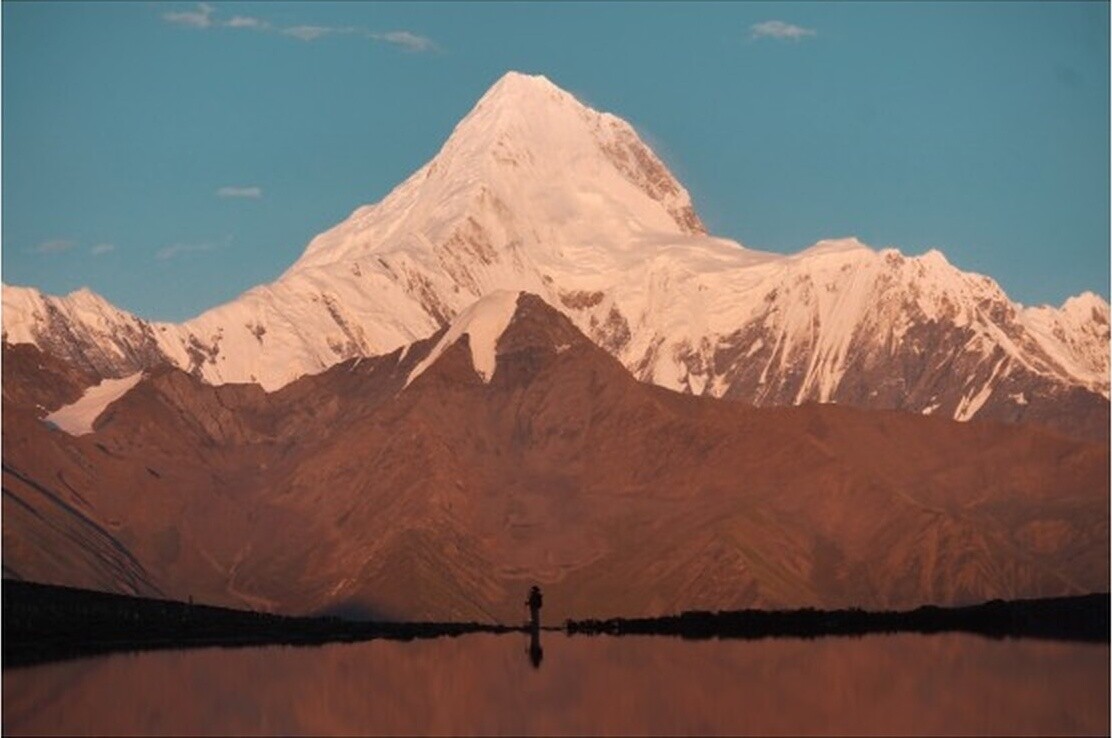
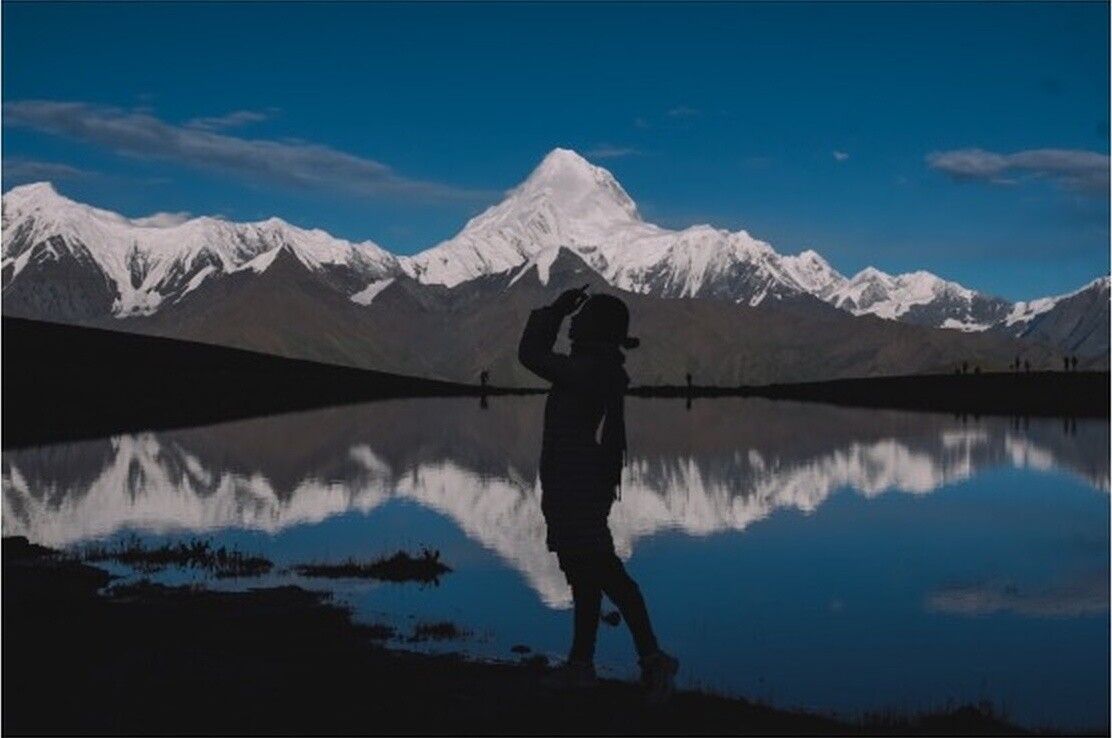
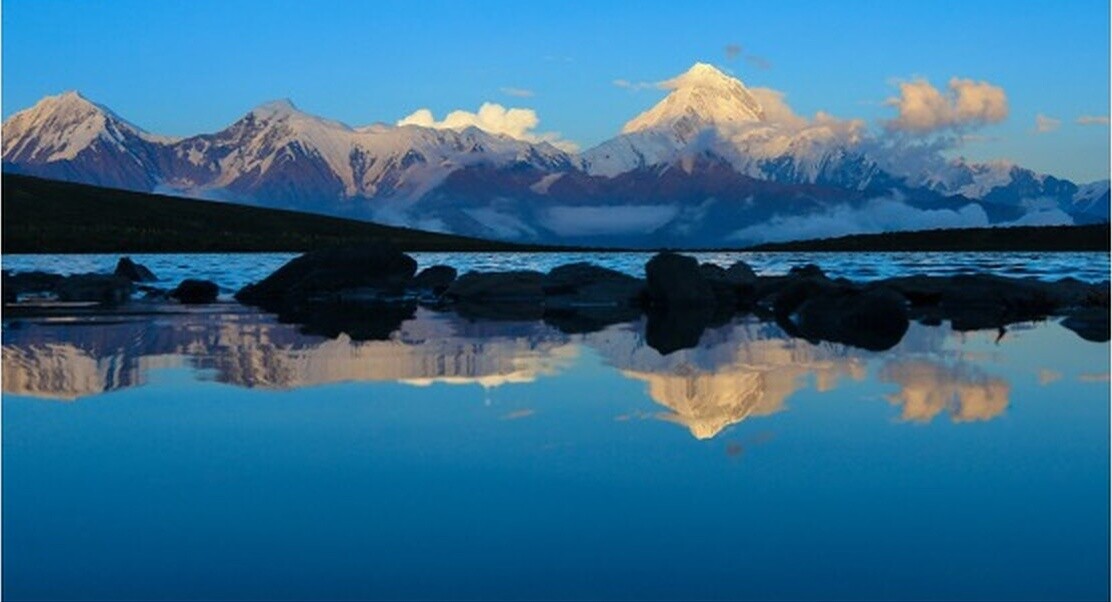
Lengga Lake (4,500 m) — the reflection everyone comes for
The operator calls it the best position on the mountain for the reflection of the Gongga peaks, and one of the finest places anywhere to photograph it. You go up on the fourth day and wait for the sun to leave the summit. About 4 km and three hours on foot from Yulongxi, or you can ride up.
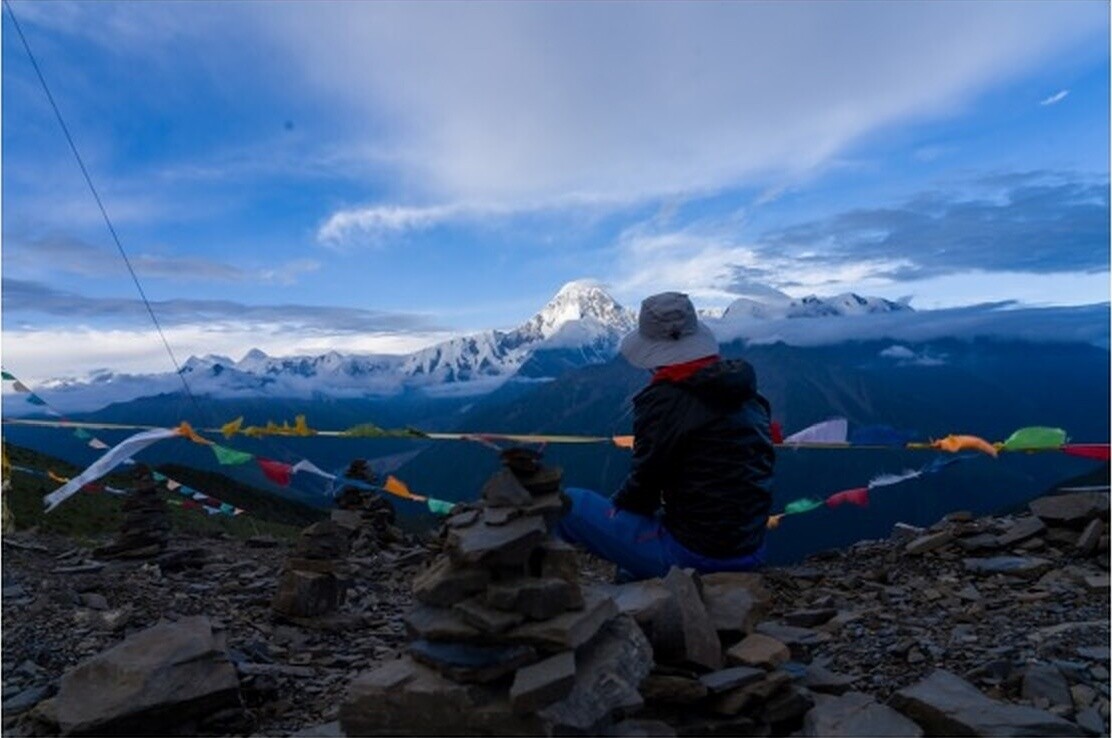
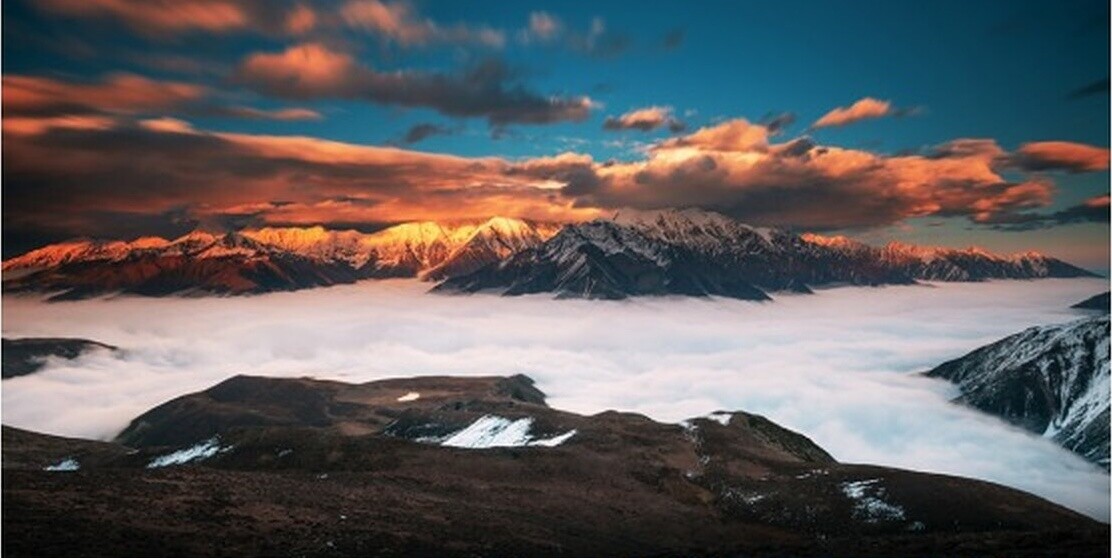
Zimei Pass (4,500 m) — cloud sea, then gold
You drive up to the pass in the early morning on Day 5, in time for sunrise on Gongga. The valleys below fill with cloud overnight and the first light hits Gongga above it. From here the route turns down and out.
Gexi Grassland (3,400 m) — where the walking starts
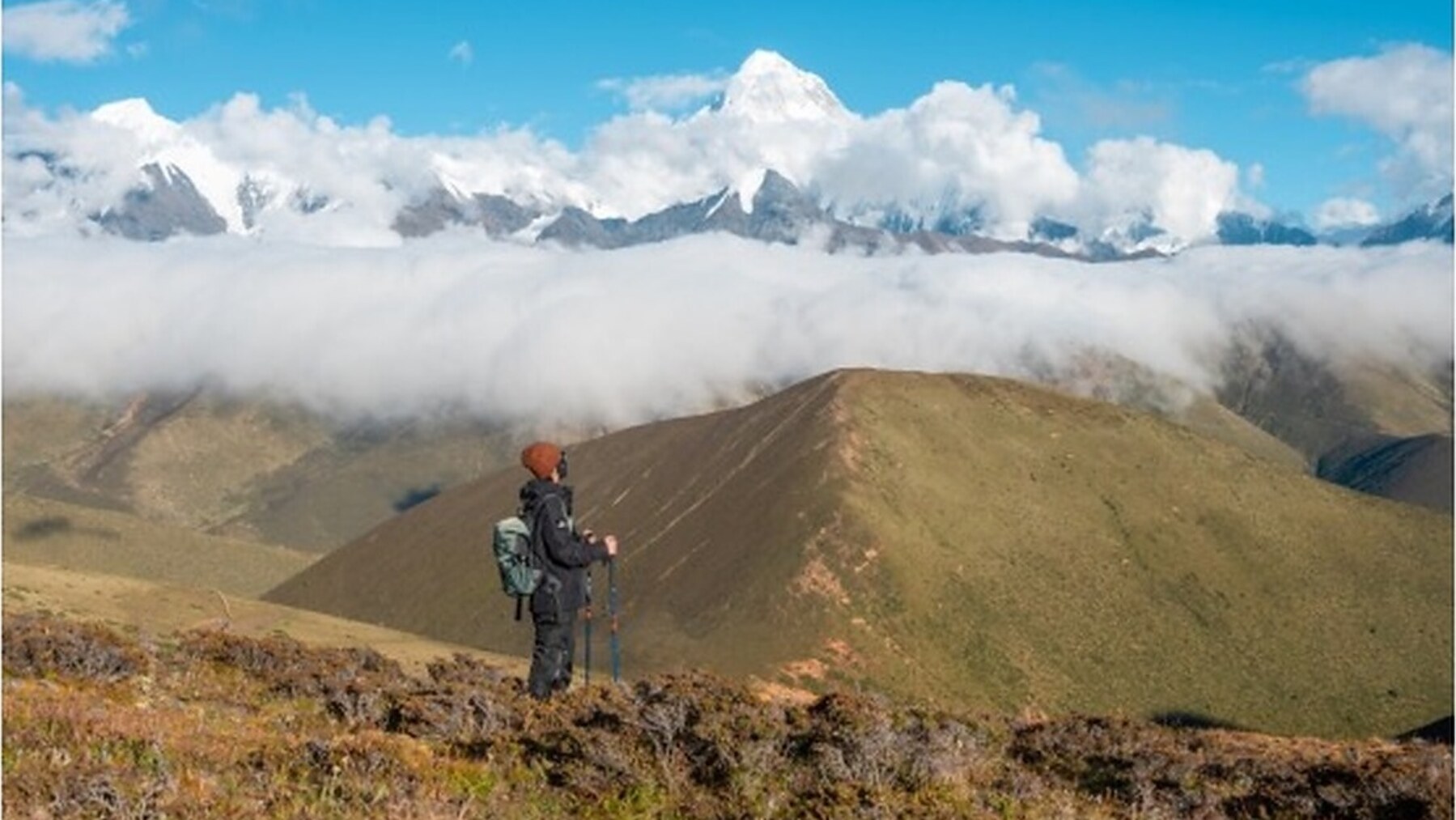
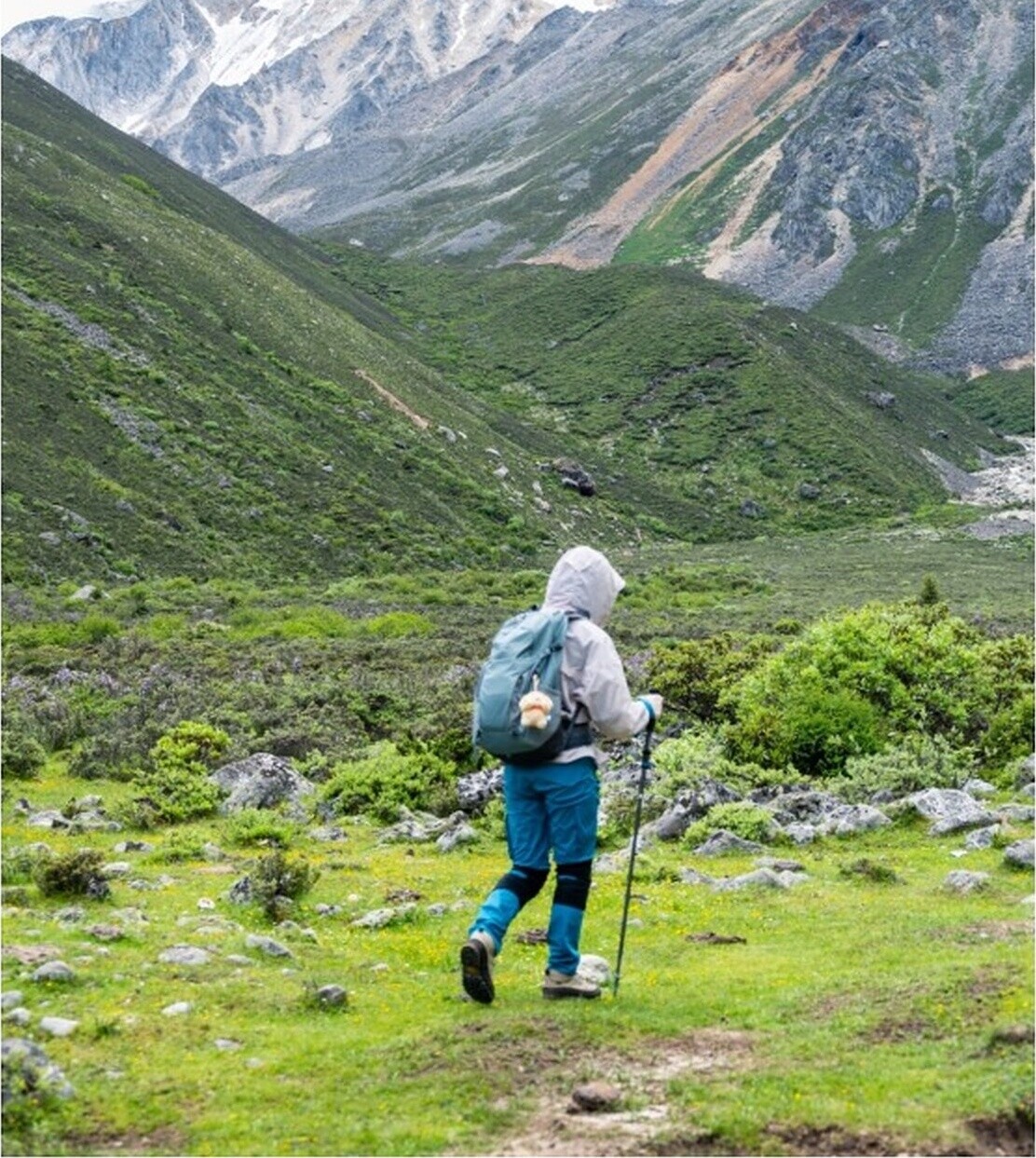
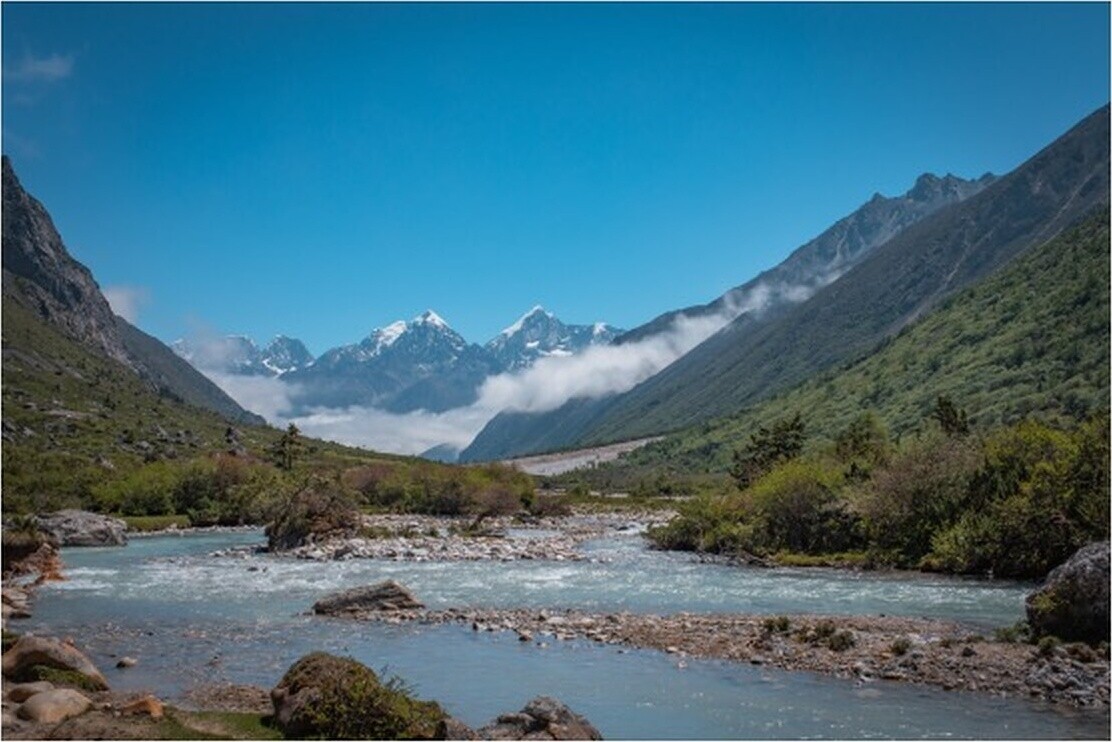
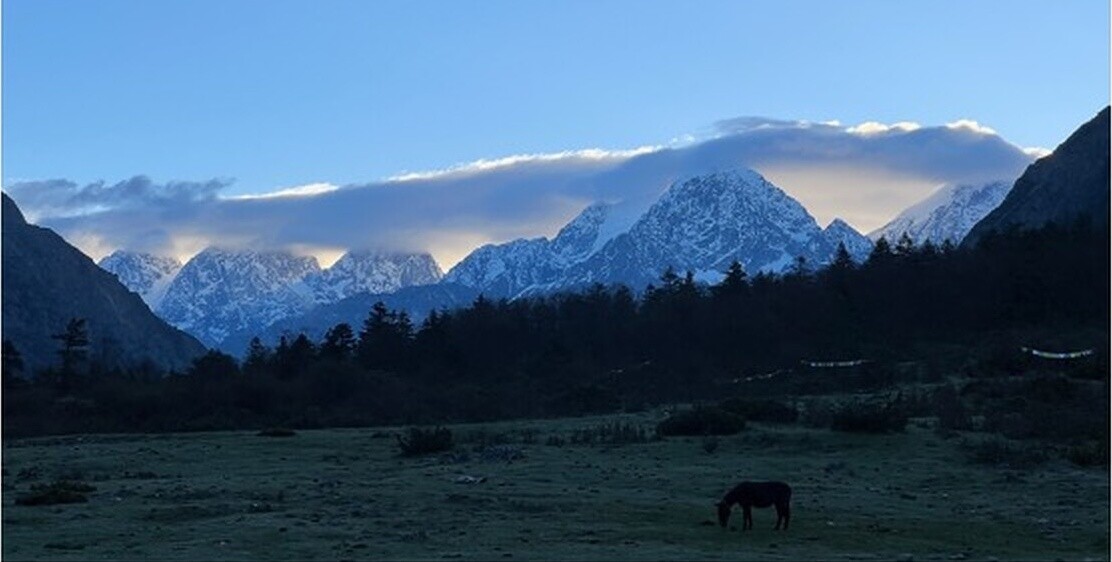
The road ends and the horses are loaded. Looking back across the grassland you get Baihaizi and the Tianhaizi snow peaks; ahead the path follows the river upstream and the view opens out as you go, reaching Liangchahe camp around midday.
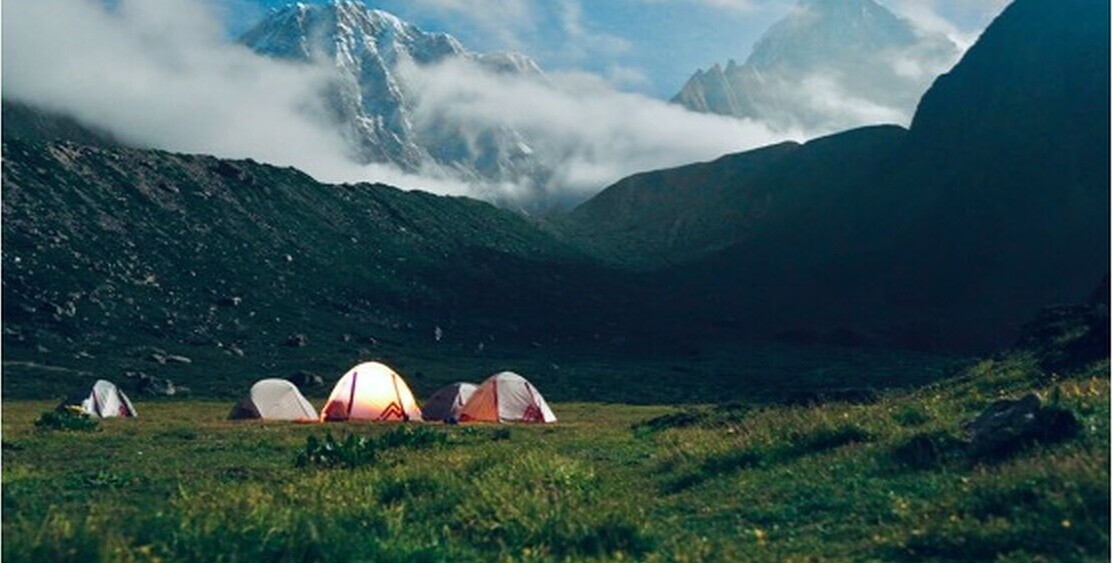
Upper Riwuqie Camp (4,350 m) — a night under two 6,000ers
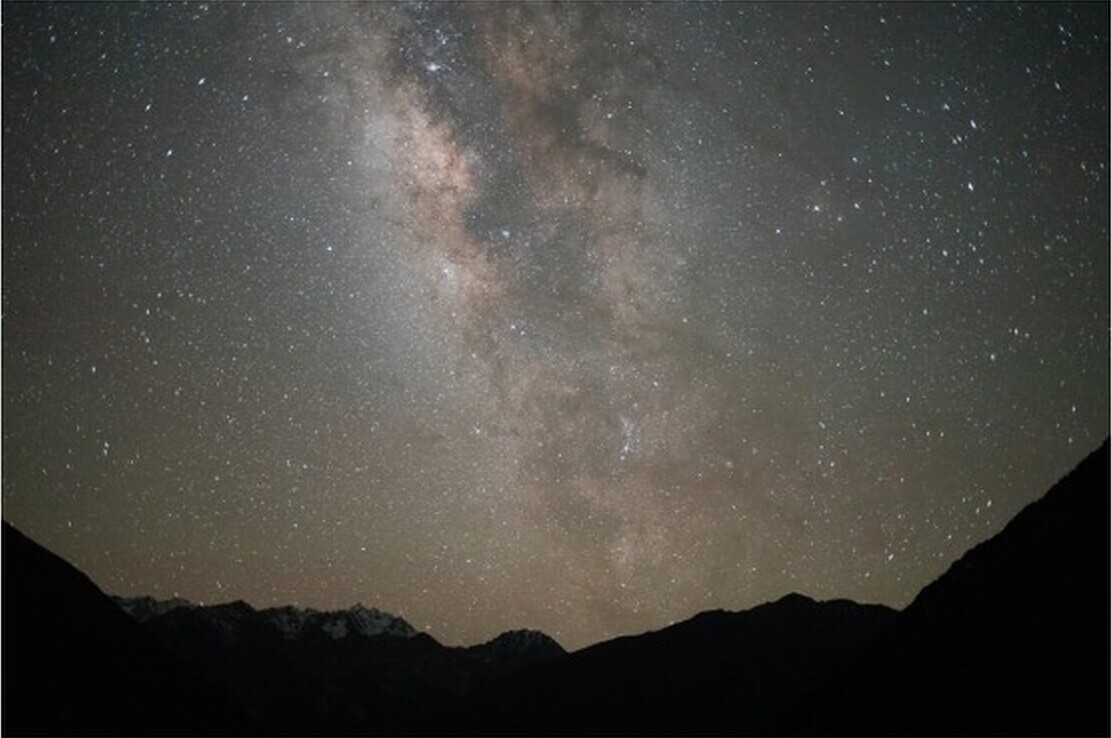
Camp sits at the foot of Jiazi Peak (6,540 m) and Riwuqie Peak (6,379 m), close enough that they fill the sky. Last light comes off both, and the night is spent in a tent under a sky full of stars.
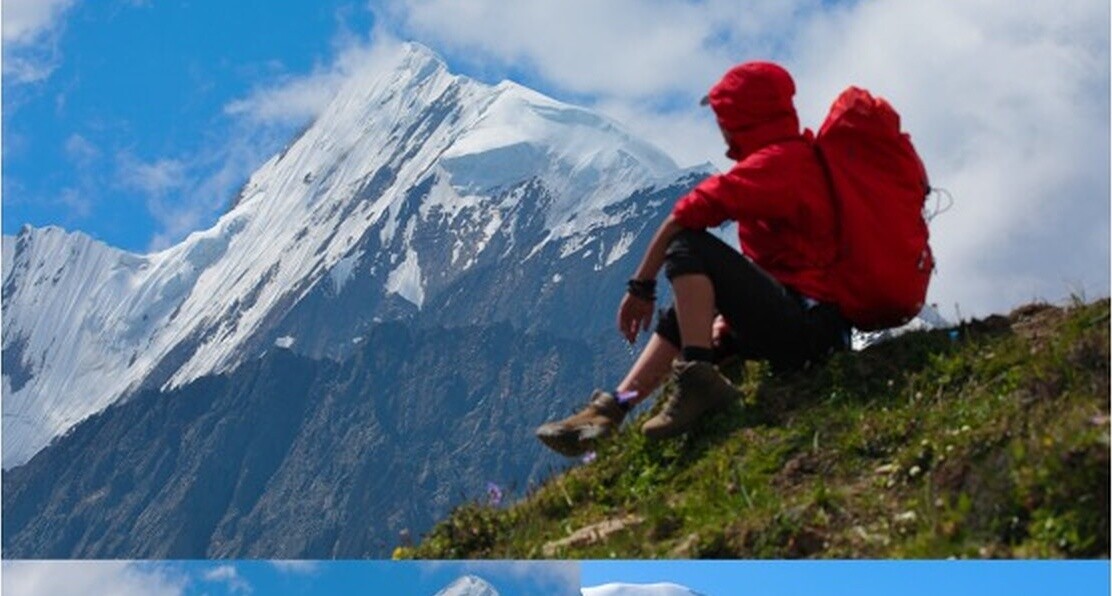
Ridaman Pass (5,000 m) — the top of the crossing
Eight kilometres of climbing gets you here on the third morning, past the Ledomain viewpoint where four 6,000 m peaks line up in one frame if the weather holds. Standing on the pass, the ranges run out unbroken in front of you. Then nine kilometres down the other side.
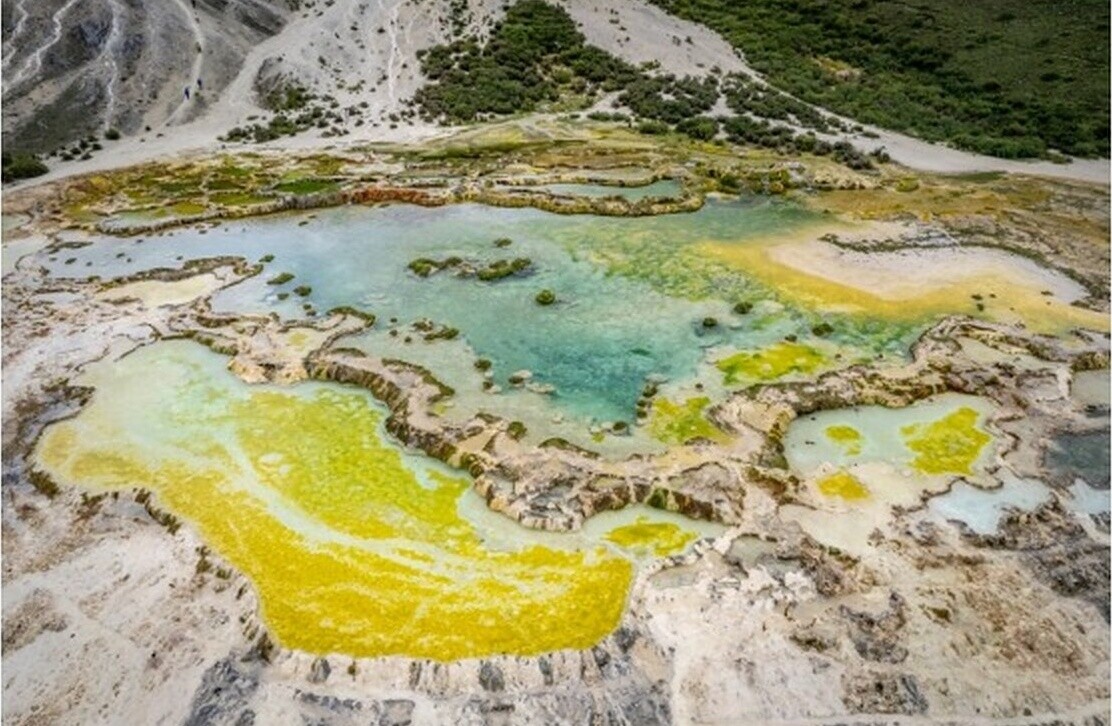
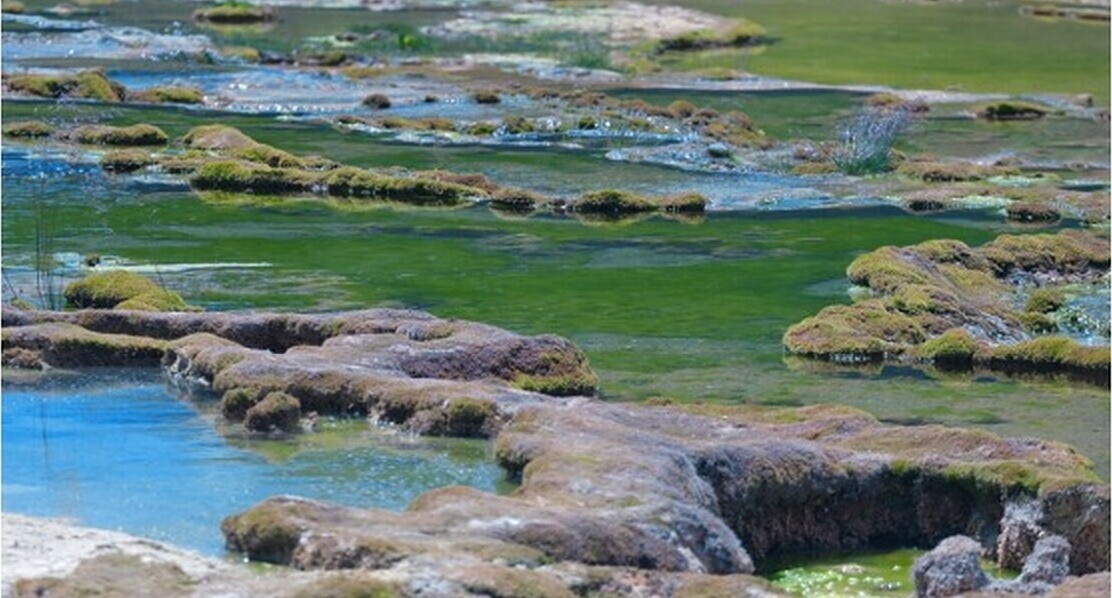
Quanhuatan (4,100 m) — travertine pools
A terraced set of coloured calcified pools, about 3 km on foot there and back on the easy day. There is a motorbike ride further up to the cold springs if you want the higher viewpoint.
Where in China
📍 Sichuan Province · Mt. Gongga (Minya Konka), western China
What you'll do
Mt. Gongga (Gòngga Shān, 7,509 m) is the easternmost and largest sacred mountain in China's Tibetan regions, and the peak Chinese trekkers call the King of Sichuan's Mountains. The circuit around it is one of the routes Chinese trekkers rank among the country's ten classics, in the same company as the Meili north slope, the Rock Route and the Yading kora.
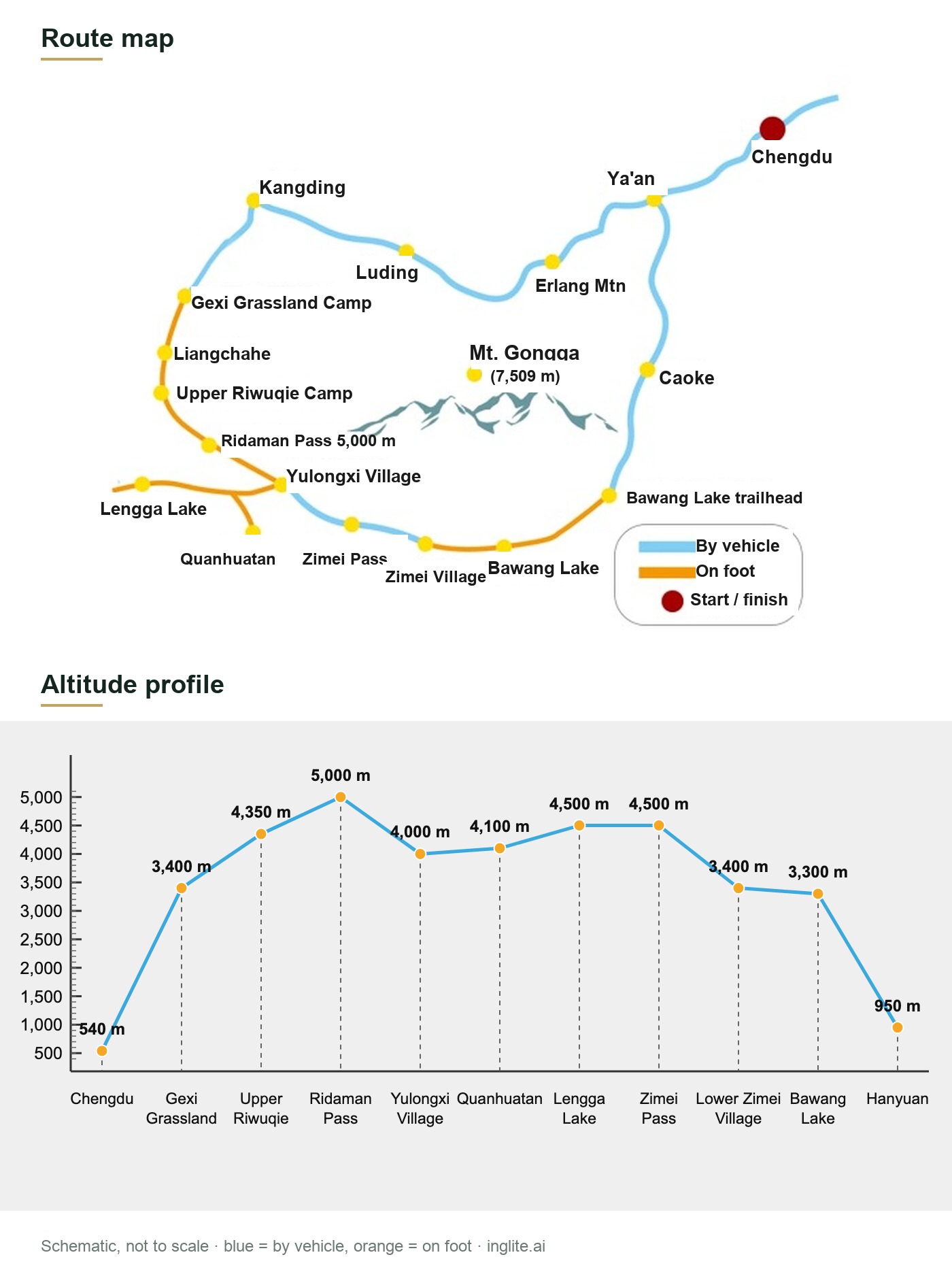
The walking splits into four days. Two of them are the real work: a long valley day up to the alpine camp at Upper Riwuqie, then the crossing of Ridaman Pass at 5,000 m, with the Ledomain viewpoint on the way up where — in clear weather — four separate 6,000 m peaks sit in one frame. After that the route drops onto the west side of the massif, where two lighter days take in the travertine pools of Quanhuatan and the sunset reflection at Lengga Lake, and the last walking day starts at Zimei Village, after an early drive up to Zimei Pass for sunrise, and goes out through forest past Bawang Lake to the trailhead, where a vehicle takes you down to Hanyuan at 950 m.
It is a serious route: the operator grades it four stars out of five, and names two difficulties — the high altitude, with the pass close to 5,000 m, and weather that can change from one moment to the next. You sleep at 4,350 m on the second night and cross 5,000 m on the third. Prior trekking experience at altitude is what the operator asks for.
Inglite does not operate this trek. It is run by a licensed Chinese operator we work with; we make the introduction, help you get the trip and the dates right, and stay reachable while you are out there.
Day by day
Day 1
Chengdu → Laoyulin, outside Kangding
Meet in Chengdu at 2pm and drive west — the Chengdu–Ya'an and Ya'an–Kangding expressways, over Erlang Shan and past Luding — to Laoyulin. After dinner your guide runs the pre-trek briefing and hands out the supplies you take into the mountains. Twin room. Dinner included.
Day 2
Gexi Grassland (3,400 m) → Liangchahe → Upper Riwuqie Camp (4,350 m) · 18 km, ~7 h
A transfer takes you to Gexi Grassland and the walking starts there. The path follows the river upstream; the view gradually opens out, and the Tianhaizi snow peaks behind you grow more impressive as you climb. You reach Liangchahe camp around midday — the first place Xiaogongga (6,027 m) comes into view — then carry on past Lower Riwuqie to the camp at Upper Riwuqie, which sits directly beneath Jiazi Peak (6,540 m) and Riwuqie Peak (6,379 m). Tents at camp. Breakfast and dinner at camp; trail food during the day is your own.
Day 3
Ledomain viewpoint → Ridaman Pass (5,000 m) → Yulongxi Village (4,000 m) · 17 km, ~8 h
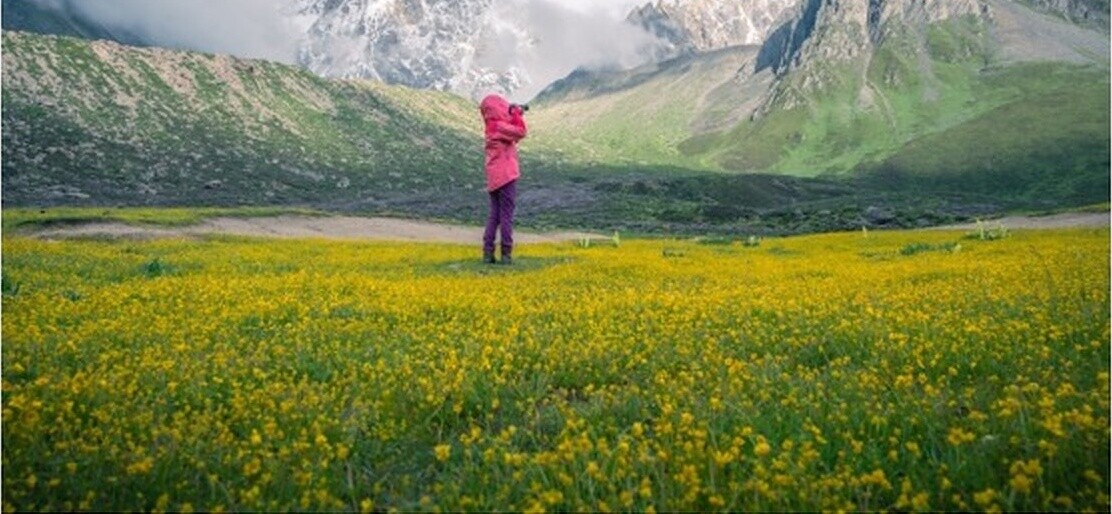
Uphill from the start. The Ledomain viewpoint comes first — on a clear morning, four 6,000 m peaks in one frame — then the crossing of Ridaman Pass at 5,000 m, the high point of the trip, with an unbroken chain of snow peaks right in front of you. From about midday it is downhill to the pastures, which in July and August are a field of flowers. Eight kilometres of climbing and nine of descent. A transfer covers the last stretch to Yulongxi, where there is a hot shower waiting. Twin room with private bathroom. Breakfast at camp and dinner at the guesthouse; trail food is your own.
Day 4
Quanhuatan (4,100 m) → Lengga Lake (4,500 m) → back to Yulongxi · 16 km, ~8 h
An easier day after two hard ones. Drive up to Quanhuatan in the morning — about 3 km on foot around a set of coloured calcified pools. There is an optional local motorbike ride further up to the cold springs and the mountain view (you take that at your own risk). Back to the guesthouse at midday to rest, then up to Lengga Lake in the afternoon: roughly 4 km and 3 hours on foot, or you can ride a horse up. Lengga is one of the finest places anywhere to photograph the Gongga peaks reflected — you wait there for the sunset alpenglow, then walk back down the same way. Twin room. Breakfast and dinner at the guesthouse; trail food is your own.
Day 5
Zimei Pass (4,500 m) → Zimei Village (3,400 m) → Bawang Lake (3,300 m) → Hanyuan (950 m) · 19 km, ~5 h
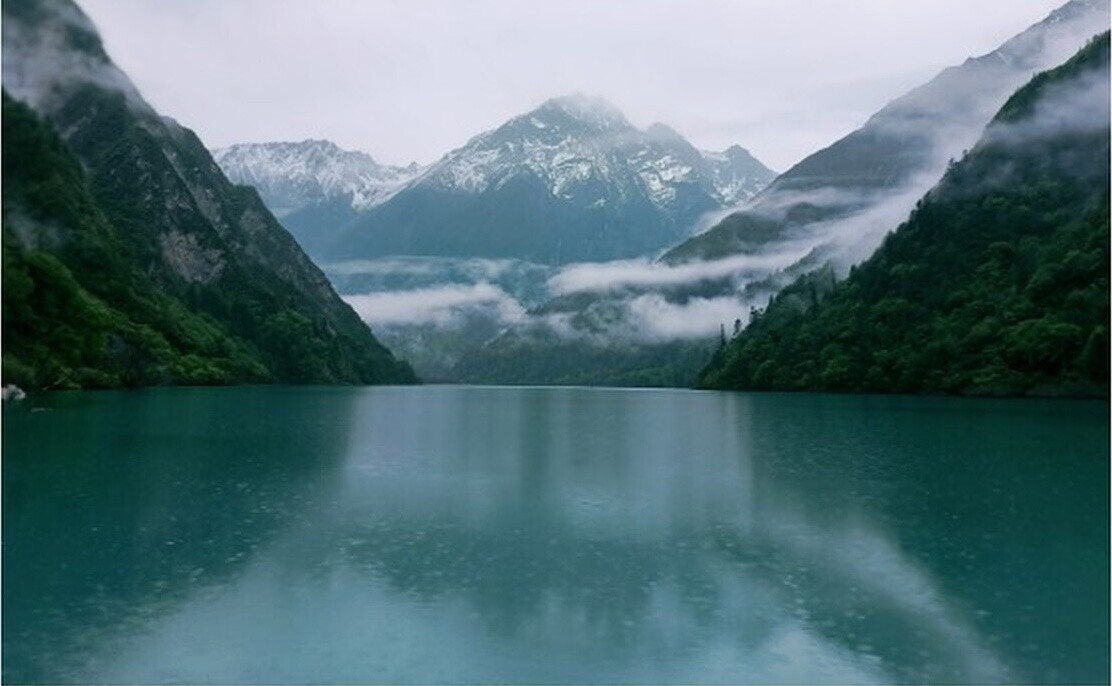
An early drive up to Zimei Pass for sunrise on Gongga, then down to Zimei Village where the last of the walking begins. The path out passes Bawang Lake, hidden deep in dense forest, its water shifting colour. Trekking ends at the Bawang Lake trailhead; from there it is a drive down to the county town of Hanyuan for the night. Shimian barbecue is the local speciality, and the group can head out to try it together. Twin room in a hotel. Breakfast included; lunch and dinner are your own.
Day 6
Hanyuan → Chengdu · about 4 hours
Drive back to Chengdu, arriving around 2pm, where the group breaks up. Onward travel the same day is realistic. Breakfast at the hotel; food on the road is your own. Tonight's accommodation is not included — tell us if you want a Chengdu hotel booked.
Why this trek
A crossing, not a basecamp trip
You start walking at Gexi Grassland on the north side and finish at the Bawang Lake trailhead on the south, having gone right around the massif. The only ground you cover twice is on Day 4 — the 3 km there and back at Quanhuatan in the morning, and the climb to Lengga Lake, which comes down the same trail. The profile runs 540 m in Chengdu to a 4,350 m camp to a 5,000 m pass and down to 950 m at Hanyuan — you pass through most of the vegetation belts western Sichuan has.
Horses carry the load
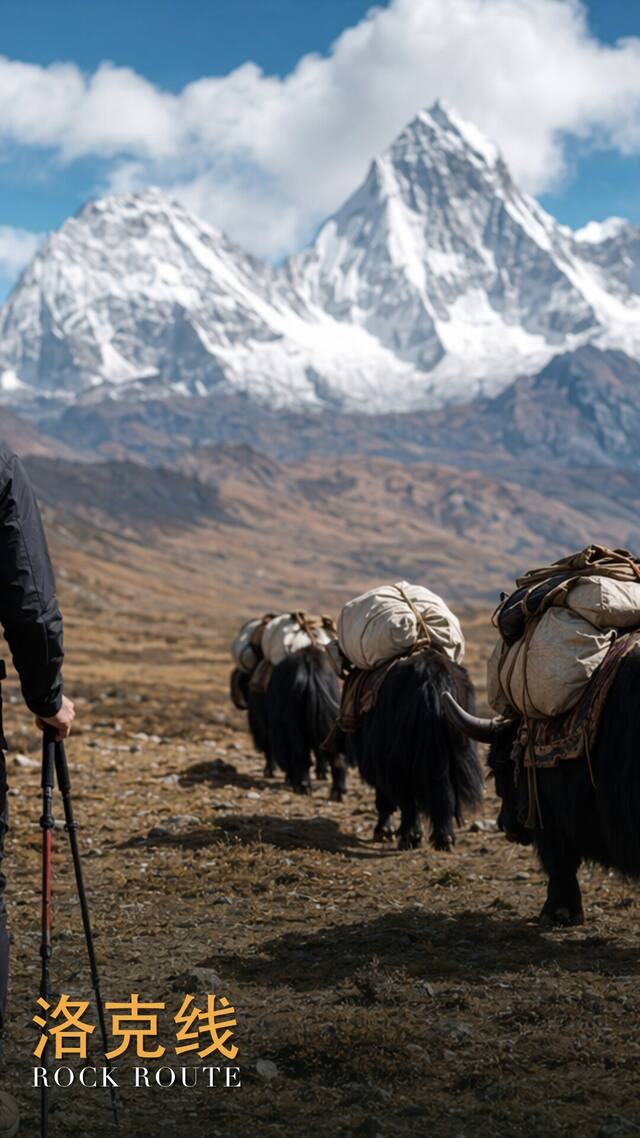
A muleteer team takes 15 kg per person in from the trailhead, so you walk with a day pack. A waterproof duffel is provided — one each — along with two trekking poles and a buff.
Four 6,000 m peaks from one viewpoint
The Ledomain viewing platform comes on the long uphill to Ridaman Pass, before the pass itself. Weather permitting, Xiaogongga, Jiazi, Riwuqie and Ledomain are all visible at once.
Twin rooms, not dorm beds
One night camping is part of the route. The rest are twin rooms — including both nights at Yulongxi, which have private bathrooms and hot water. The operator is explicit that it does not put guests in shared dormitories.
Carried kit for the things that matter
The group travels with bottled oxygen, a satellite phone, radios and a first-aid kit, led by a certified outdoor leader working with local Tibetan guides who stay with the group for the whole route.
Included
All ground transport for the whole trip — Chengdu out to the trailhead, the in-route transfers, and Hanyuan back to Chengdu
Five nights' accommodation as listed: three nights in twin guesthouse rooms, one night camping, one night in a hotel twin room
Meals as listed in the day-by-day — breakfast on Days 2–6 and dinner on Days 1–4
Entry tickets for Quanhuatan and Lengga Lake
A certified outdoor leader plus local Tibetan guides, with basic trip photography by the leader
Horse transport of personal kit into the mountains, up to 15 kg per person
Group safety equipment — bottled emergency oxygen, satellite phone, radios and a first-aid kit
Loan of a waterproof duffel (one each), two trekking poles and a buff, all yours to use for the trip
High-altitude outdoor accident insurance to ¥700,000 for the duration of the activity
A commemorative medal, included when you book
Know before you go
Not included: international and domestic travel to and from Chengdu; personal spending; the optional horse ride to Lengga Lake and motorbike at Quanhuatan; drinks with included meals; and anything not listed above.
Trail food on the five trekking-and-transfer days is your own — bring or buy your snacks and trail lunches before you leave Chengdu.
Rooms are twin-share. There is no forced single supplement if you travel alone and are willing to share; a room to yourself is ¥480 (about $80) for the trip. On the National Day departures single occupancy has to be confirmed with the operator case by case, and on 30 September, 1 and 2 October it is not available at all.
Sleeping bag hire is ¥100 (about $17), which covers transport and the one camping night. Bring your own if you would rather — it goes on the horses.
Winter is not suitable for the circuit — that is the operator's own guidance, and its reasons are poor weather, exposed high campsites with little vegetation cover, and low temperatures that bring a real risk of hypothermia.
The operator names two difficulties on this route: the altitude — the pass tops out near 5,000 m — and weather that can turn in minutes. You sleep at 4,350 m on night two and cross the 5,000 m Ridaman Pass on day three. Arrive in Chengdu with time in hand, and tell us honestly what altitude you have slept at before.
The operator does not accept anyone with an infectious disease, cardiovascular or cerebrovascular disease, respiratory disease, psychiatric illness, high blood pressure, high blood sugar or high blood lipids, severe anaemia, anyone recovering from medium or major surgery, anyone pregnant, or anyone with restricted mobility. Its own instruction is to consult a doctor and have a check-up before you travel; it holds you responsible for the consequences of anything you conceal.
No alcohol for the duration of the activity — that is the operator's rule, not a suggestion, and it applies from the moment the group leaves Chengdu.
The operator carries ¥700,000 of accident cover, which is not the same as Western travel insurance. You still need your own policy that covers trekking to 5,000 m and emergency evacuation — we will not confirm a booking without it.
There is no vehicle access between Gexi Grassland, where the walking starts, and the pastures below Ridaman Pass where the next transfer meets the group — the operator's own timings for that stretch are 18 km and about 7 hours in to the Upper Riwuqie camp, then 17 km and about 8 hours over the pass. If a member's safety is at risk, the leader has the right to ask them to withdraw from the activity. Where outside rescue is needed, the operator's terms put the cost on the individual where the cause is personal, and split it across the group where the cause is force majeure.
The operator reserves the right to run the circuit in reverse if conditions make the normal direction unworkable. The places are the same; the order and the overnight stops change. We will tell you before departure if that happens.
Departures are Tuesday, Thursday and Saturday, leaving Chengdu at 2pm. There are extra departures around National Day: 25 and 27 September 2026 at the standard rate, and 30 September, 1 and 2 October 2026 at a peak-date rate, leaving Chengdu at 1pm rather than 2pm. The 25 September departure can also be upgraded to two nights at Yulongxi. Ask us for the figure that applies to your date.
Booking, deposit and cancellation terms are set out in full on our booking and refund policy page — read it before you pay anything.
What to bring
60 L rucksack with a rain cover for your main kit — the horses carry your gear in a 120 L waterproof duffel the operator issues, one per person, up to 15 kg each
20–28 L day pack for what you carry yourself
Sleeping bag rated for the season — the operator's own kit list specifies an extreme rating of −15°C; hire is available
Waterproof shell jacket and trousers, plus a softshell or fleece layer
Wicking base layers and a warm mid-layer — down or synthetic, weight to suit the month
Waterproof trekking boots that are already broken in, gaiters, and several pairs of trekking socks
Sun hat and warm hat, gloves, sunglasses, high-factor sun cream and lip balm — UV at 5,000 m is severe
Head torch, insulated bottle or flask, your own eating utensils, and personal toiletries
Trekking poles are provided, as is a waterproof duffel — bring your own poles only if you prefer them
Crampons or microspikes in the snow months; ask us whether your dates need them
Your own regular medication — the operator suggests cold, headache, anti-diarrhoea and motion-sickness remedies — plus anything prescribed for you, and your passport and travel documents
FAQ
How many days is the Gongga Grand Traverse trek?
Gongga Grand Traverse runs 6 days / 5 nights.
How hard is the Gongga Grand Traverse trek?
It's rated Challenging (4/5) — previous trekking experience at altitude expected, topping out around 5,000 m (Ridaman Pass). Reasonable hiking fitness and time to acclimatize to altitude are recommended.
What is the maximum altitude on the Gongga Grand Traverse trek?
The high point is around 5,000 m (Ridaman Pass). Acclimatize gradually and take altitude-sickness precautions — consult your doctor before any high-altitude trek.
What is the best time to do the Gongga Grand Traverse trek?
The best seasons are May (spring snow) · June–August (the flower season) · September–October (settled autumn weather).
Do I need a guide for the Gongga Grand Traverse trek, and is there English support?
English-speaking support is arranged by Inglite throughout. On the mountain, the operator's team is a professional outdoor leader working with local Tibetan guides. It's run by an independent, licensed local mountain operator, with Inglite supporting you in English the whole way.
How much does the Gongga Grand Traverse trek cost?
Approximately $699 per person ($117/day · $699 total). You arrange payment directly with the licensed local operator — Inglite never collects payment.
What should I pack for the Gongga Grand Traverse trek?
Key items: 60 L rucksack with a rain cover for your main kit — the horses carry your gear in a 120 L waterproof duffel the operator issues, one per person, up to 15 kg each, 20–28 L day pack for what you carry yourself, Sleeping bag rated for the season — the operator's own kit list specifies an extreme rating of −15°C; hire is available, Waterproof shell jacket and trousers, plus a softshell or fleece layer, Wicking base layers and a warm mid-layer — down or synthetic, weight to suit the month, Waterproof trekking boots that are already broken in, gaiters, and several pairs of trekking socks, Sun hat and warm hat, gloves, sunglasses, high-factor sun cream and lip balm — UV at 5,000 m is severe, Head torch, insulated bottle or flask, your own eating utensils, and personal toiletries.
Who runs this
This route is run by our licensed local operating partner on Gongga. Inglite handles the English side — planning, questions and the introduction — and the operator runs the trek and takes payment for it.
Run by an independent, licensed local operator. You arrange payment with the operator directly — Inglite connects you and never collects payment. Outdoor travel carries inherent risks; travel insurance with high-altitude and evacuation cover is required. Booking & refunds · Terms